Uncategorized

Strawberry Francoise

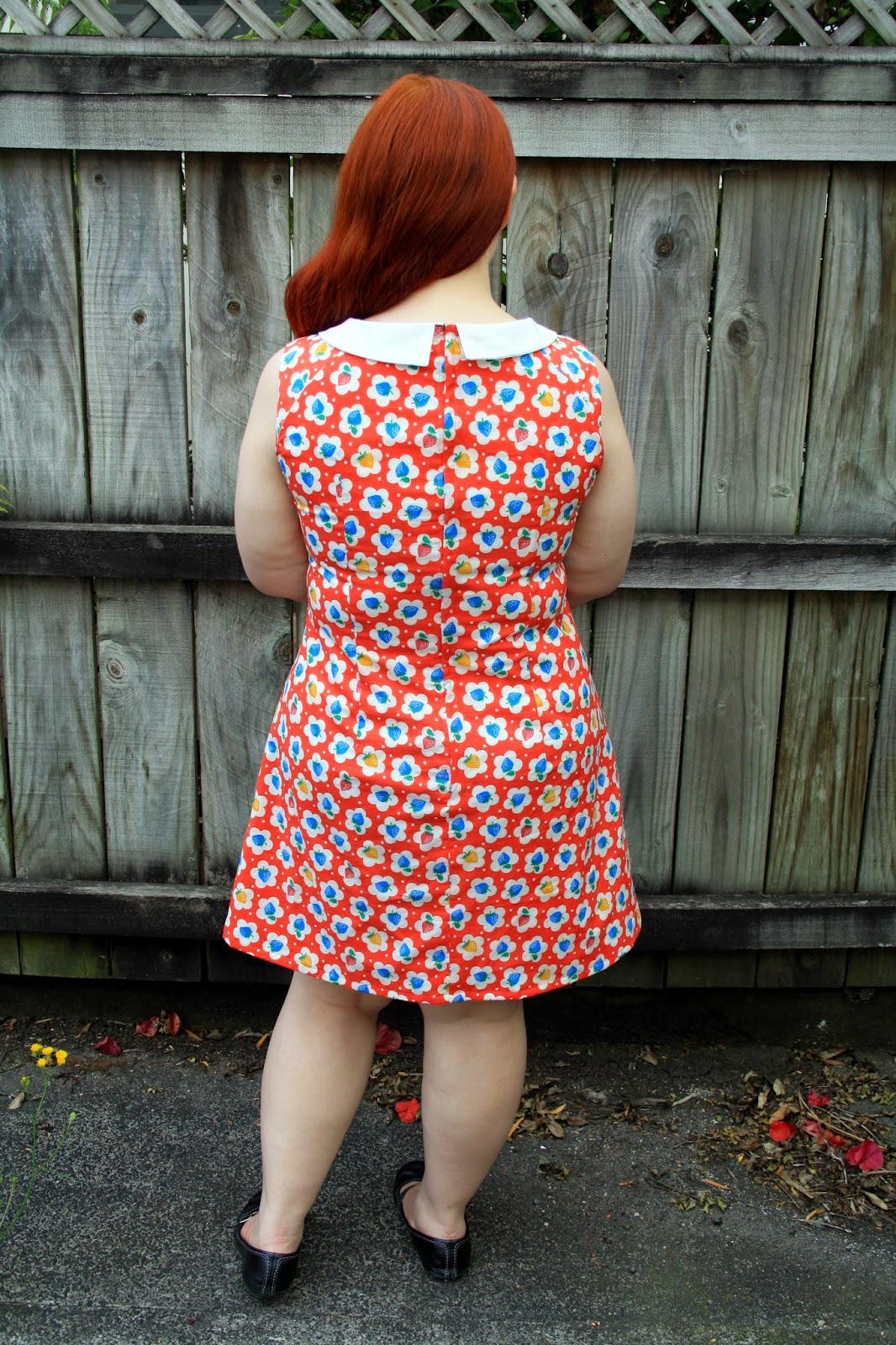
Here we are on New Year’s Eve, and I’ve just completed my last make of 2014. Phew! The pattern is the Francoise Dress by Tilly & the Buttons, made up in a multi-coloured strawberry cotton fabric my husband brought me back as a souvenir from Estonia. As the strawberry fabric was a little sheer, I lined it with a cotton white siri fabric I bought from Gertie’s Etsy store a long while back.

I made it up in a size 5 – kind of. My measurements went 5-6-5, but when I made that up in a quick muslin, it was too loose around the waist, so I cut a straight 5. I moved the side darts down by 4″, and the curved French darts down by a few inches, too. I also shortened the darts. I’ve read a few complaints about the darts in this dress- mostly that they sit too high on most people who’ve made it. I’m short and have a low set bust, so I fully expected to have to move them. Unfortunately, Tilly does not provide much information on the moving/shortening of the curved darts, and as they’re quite unusual on patterns today (that I’ve found), I struggled a bit to find any kind of resource on how to deal with them. There’s probably an easy, obvious way that I didn’t think of though. I ended up having to mostly redraw the top part of them.

Lining this was a bitch, plain and simple. I couldn’t find anyone who had made it and lined it, and again, Tilly doesn’t mention the possibility of lining it in her sewalong. Perhaps it isn’t designed to be lined. Lining a one piece, sleeveless dress is not easy. I spent some time looking at various tutorials for lining sleeveless dresses – some people recommend sewing only the shoulder seams together, some recommend everything but the shoulder seams. I tried as hard as possible to get all the seams encased between the lining and main fabric, but I didn’t succeed with the side seams, so I pinked those. In retrospect, I can see how I could have done it in an easier, cleaner fashion, but hindsight is always 20/20, no? I did find lining it made the armholes tighter, too – I’d like a smidge more room there in future.

The back looks tight, but it doesn’t feel tight to wear. I did a lapped zipper rather than the invisible zip the pattern called for – I did try the invisible zip, but a) it was a cheap one and even a low heat iron warped the tape itself, never mind the coils. I forged on anyway, but I don’t have an invisible zip foot for my Husky and anyone who says you can achieve a good result with a regular zip foot is deluded. I have never achieved a zip that could be called invisible with a regular zip foot, and this attempt was no different. And yes, I ironed the coils back (as much as I could with my crappy zip), and adjusted my needle as much as my machine allowed, but no dice. So handpicked lapped zip it was, and despite appearances in this photo, it went in well. Unfortunately, it presented problems with the lining and how to attach it to the zip. I managed to get it looking nice on the inside, but it required extra rows of stitching.

Once I tried it on, I was a bit deflated – despite my muslin, it was still a bit baggy under the boobs and accentuated my tummy. I took it off again and took in the curved darts by another 1/2″ on each side at the top, and I like the result much better. However, the curve on them near the tip ended up quite severe and was difficult to press. You can’t really tell with this busy print though. Speaking of the print, I think it may have been printed off grain, as I made sure to cut the pattern on grain and the strawberries still seem to be falling on a slight diagonal rather than directly horizontal. Oh well.

In the end, I’m happy enough with the result – it will definitely get worn this summer for sure as it’s nice and light and cute.

Here’s to more productive sewing and more cute outfits in 2015!

Standard
Uncategorized

Sewing for the husband: Colette Negroni

Luke and I have spoken quite a few times about me making him some clothes. He’s expressed interest in having a handmade wardrobe, and I’ve been excited to do it for him, but it’s taken a long time to come to fruition. I have, in the past whipped him up some pyjama pants and underpants, but they haven’t really been blog-worthy and, quite frankly, were not my best work. But, finally, I have completed the first proper item of clothing for him – the Colette Negroni!

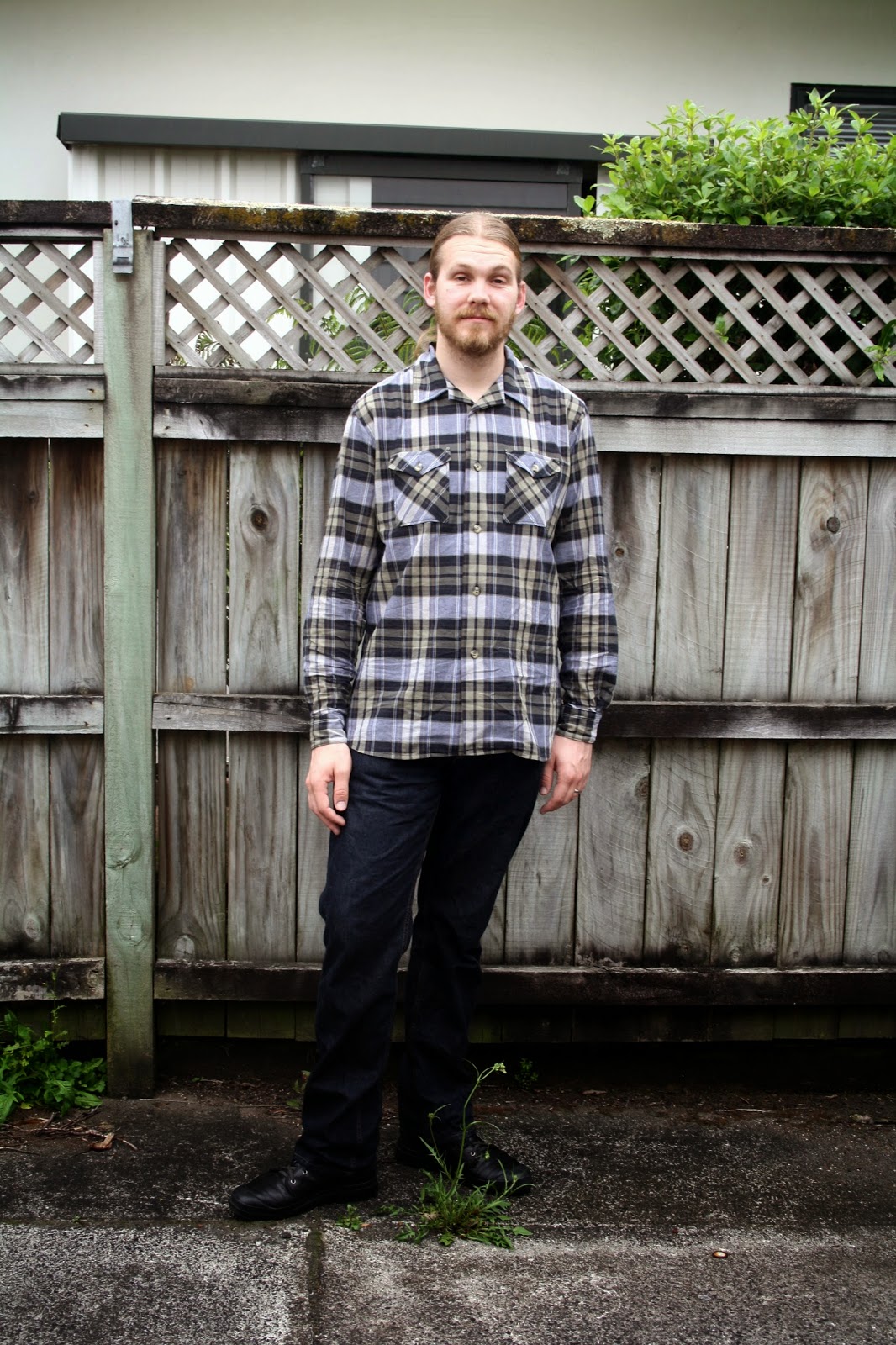
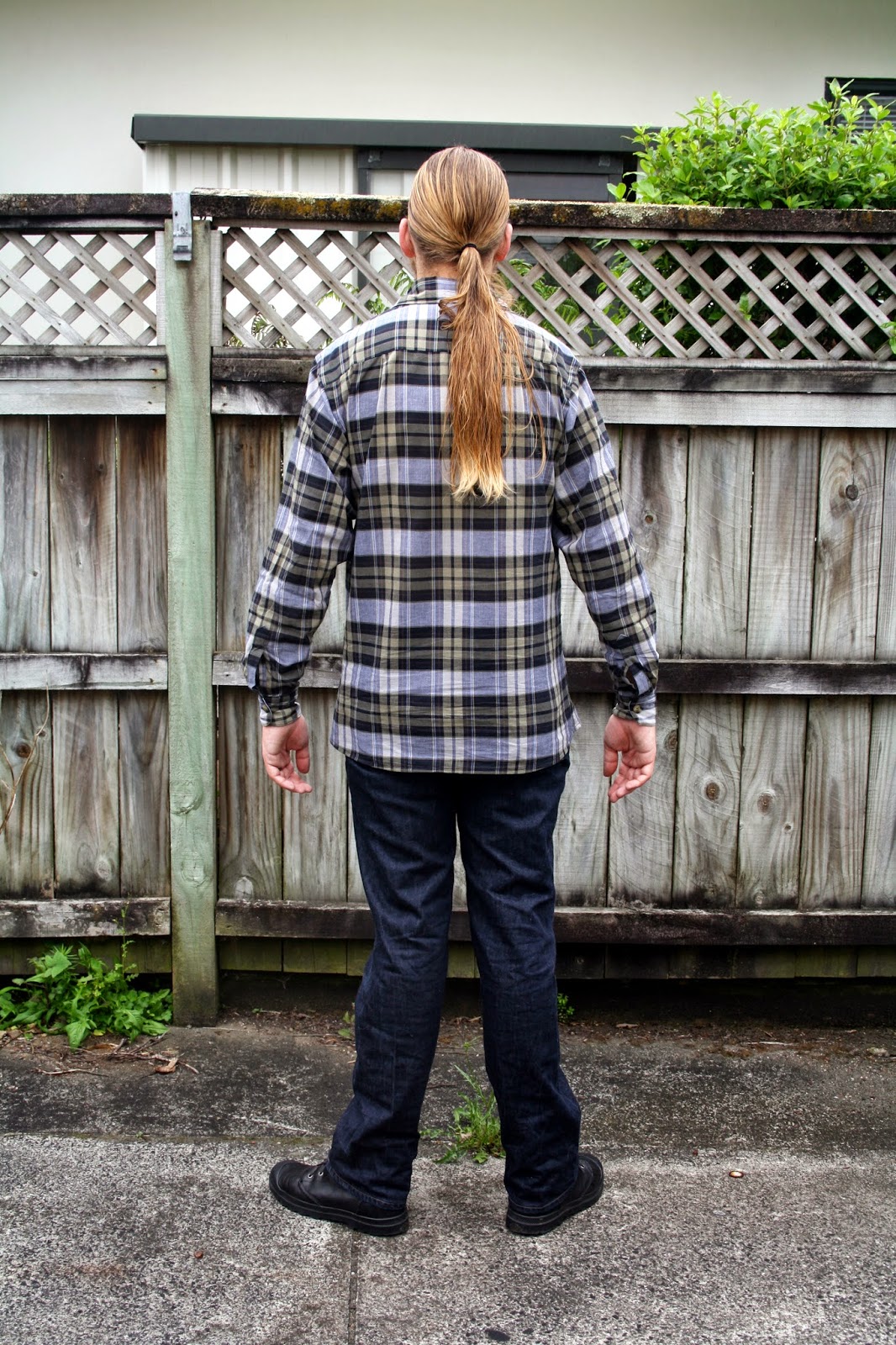
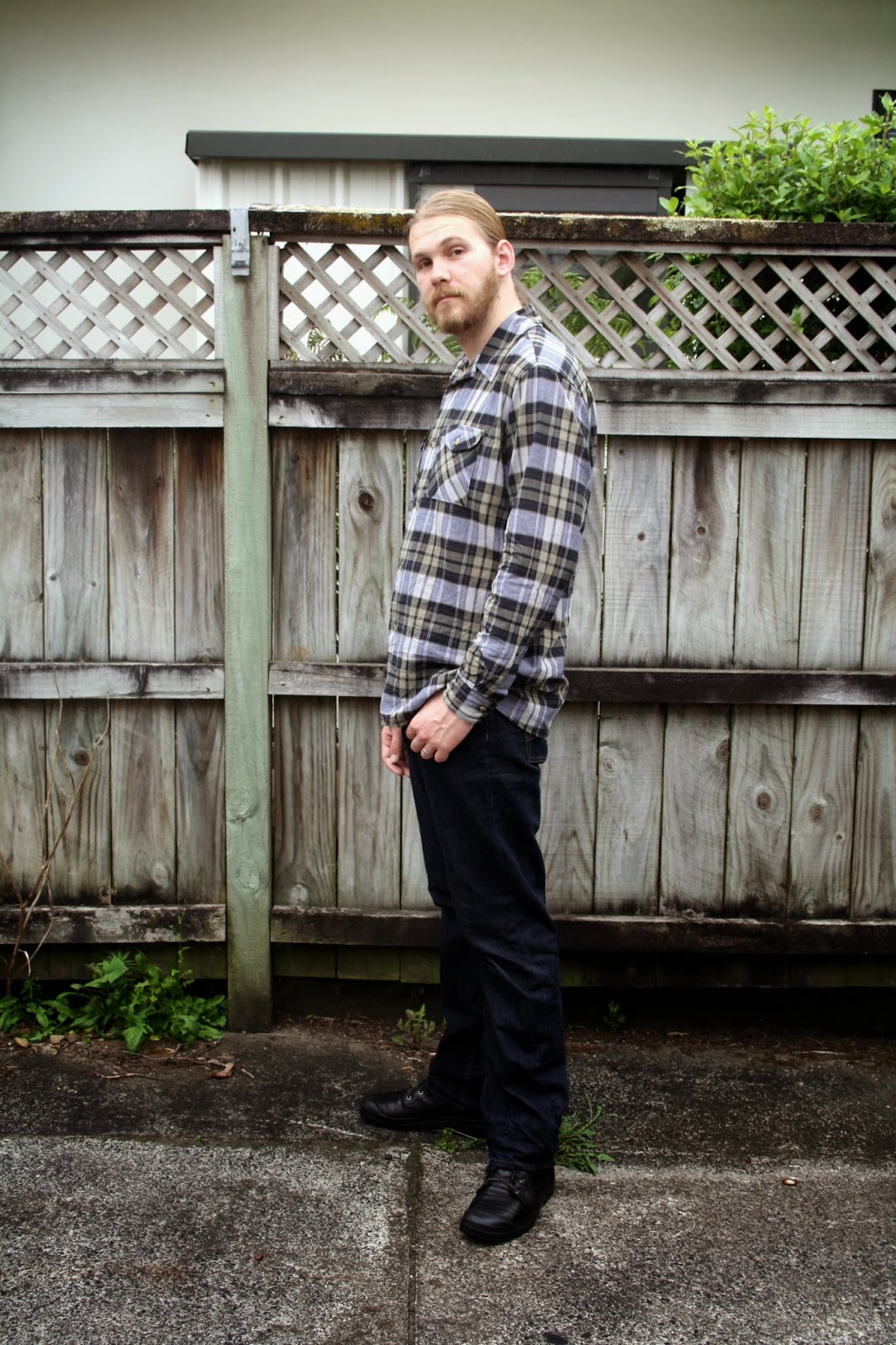
Excuse wrinkles, this was the second day of wearing. Luke picked out the fabric himself, and we got it from an Etsy store called landofoh based in Korea – it’s a lightweight cotton shirting, and it was a dream to work with. It pressed perfectly and felt soft to the touch, and light enough for summer wear. I tried my absolute best to match the plaid, and I’m pretty proud of how well I succeeded. I did want to cut the yoke on the bias, but unfortunately when ordering the fabric I didn’t take into account extra for plaid matching, so that idea was scrapped. In the end, only the pockets were cut on the bias.

Plaid matching like a boss!
I made a size L, but with the longest length, because Luke is 6’4″. That said, looking at the photos I do think it could stand to be a little shorter. Luke’s not bothered by it, though, and as long as he’s happy, I’m happy. I didn’t make any other adjustments except to shorten the sleeve by 4cm, which I was surprised I had to do. As mentioned, Luke is tall, and often has problems with too-short sleeves, so that was the last place I expected to have to remove length! I think they could do with being a tad shorter, but again, Luke’s happy with them at this length. I didn’t make a muslin (I know, living on the edge) – instead, I measured the yoke and sleeves of an existing shirt of his and when they came up almost the same as the pattern (except for the sleeves), I knew we were good to go.
In the absence of a bias-cut yoke, I deliberately offset the plaid instead
Construction wise, this was a slow make. I wanted to take my time with it, because I wanted it to be really, really good. Combined with a heavy workload, this meant I sewed it in small, half-hour blocks in the evening. I actually really enjoyed sewing it this way – I didn’t feel stressed out, I could take my time and follow the instructions and make sure it was done right. And can I just say, the instructions on this pattern are fantastic. Every seam is enclosed! The side and sleeves seams are flat-felled, and the yoke uses the much-spoken-of burrito method, which is almost magical in the way it works out. The only thing I didn’t like was the facings – they’re quite wide, and when hemming, it gets a bit bulky down there at the front where the layers are. Also, they’re not tacked down in any way which just seems a bit weird to me. I mean, the buttons and buttonholes stop them just folding out, but it still feels a bit half-finished, in my opinion. That aside, though, I highly recommend this pattern.

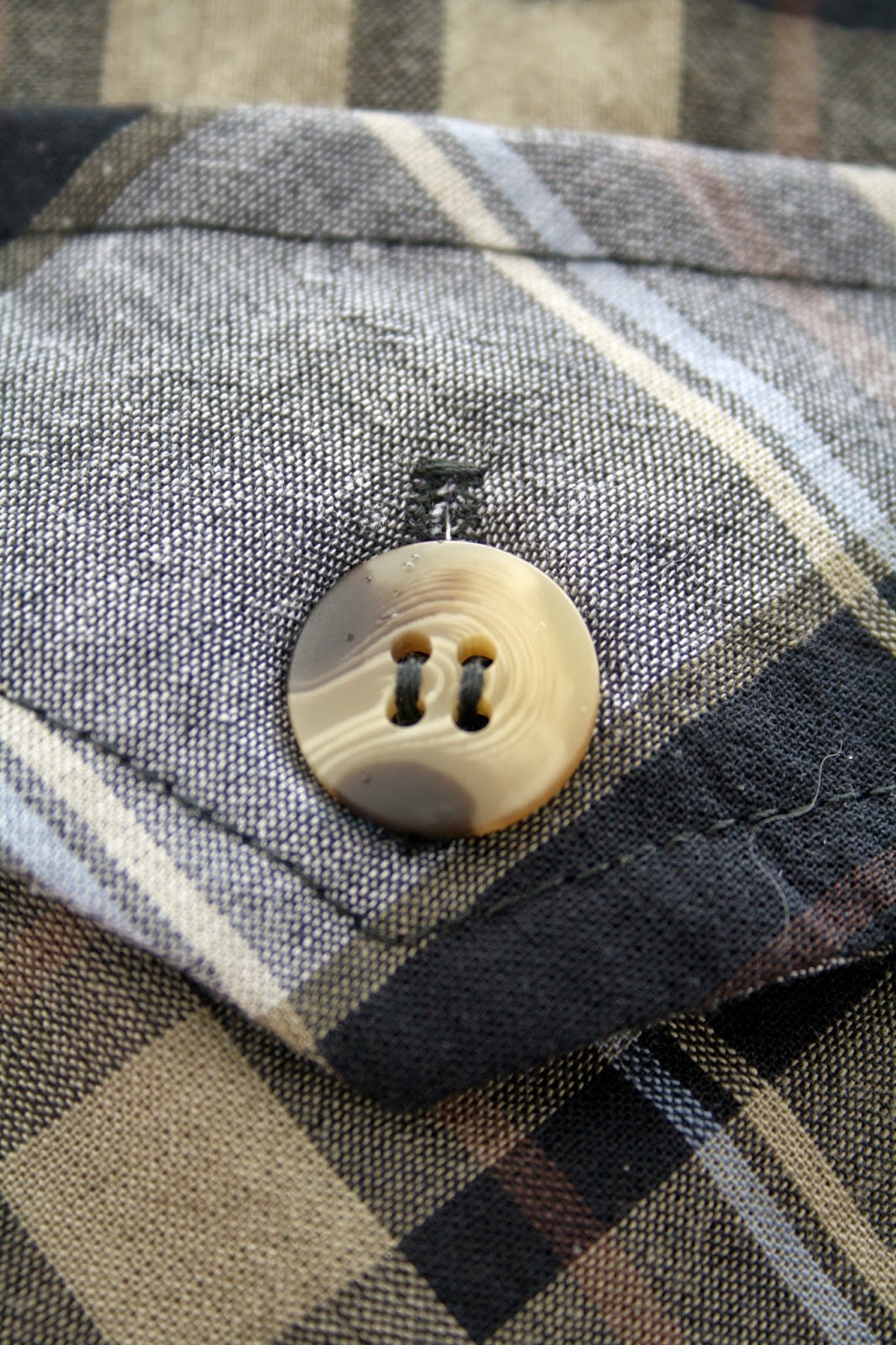
We looked through my stash for buttons and found these perfect brown ones! A while back I bought a big bag of zips and buttons from the Salvation Army for $5, and these were hiding in there. I added an extra button + buttonhole to the front of the shirt, as I felt it ended too soon and would flap open in the breeze without it. As an aside, I nearly threw my sewing machine out the window in a rage when I couldn’t get my one-step buttonhole foot to work. I tried everything, read the manual from cover to cover, but it just kept stitching in place and not, you know, moving forward to create a buttonhole. Turns out, you not only need to pull the little lever down, but you also need to push it back. I felt pretty silly when I finally worked it out, but in my defense, the manual doesn’t mention that! Luckily I practiced on scraps first.

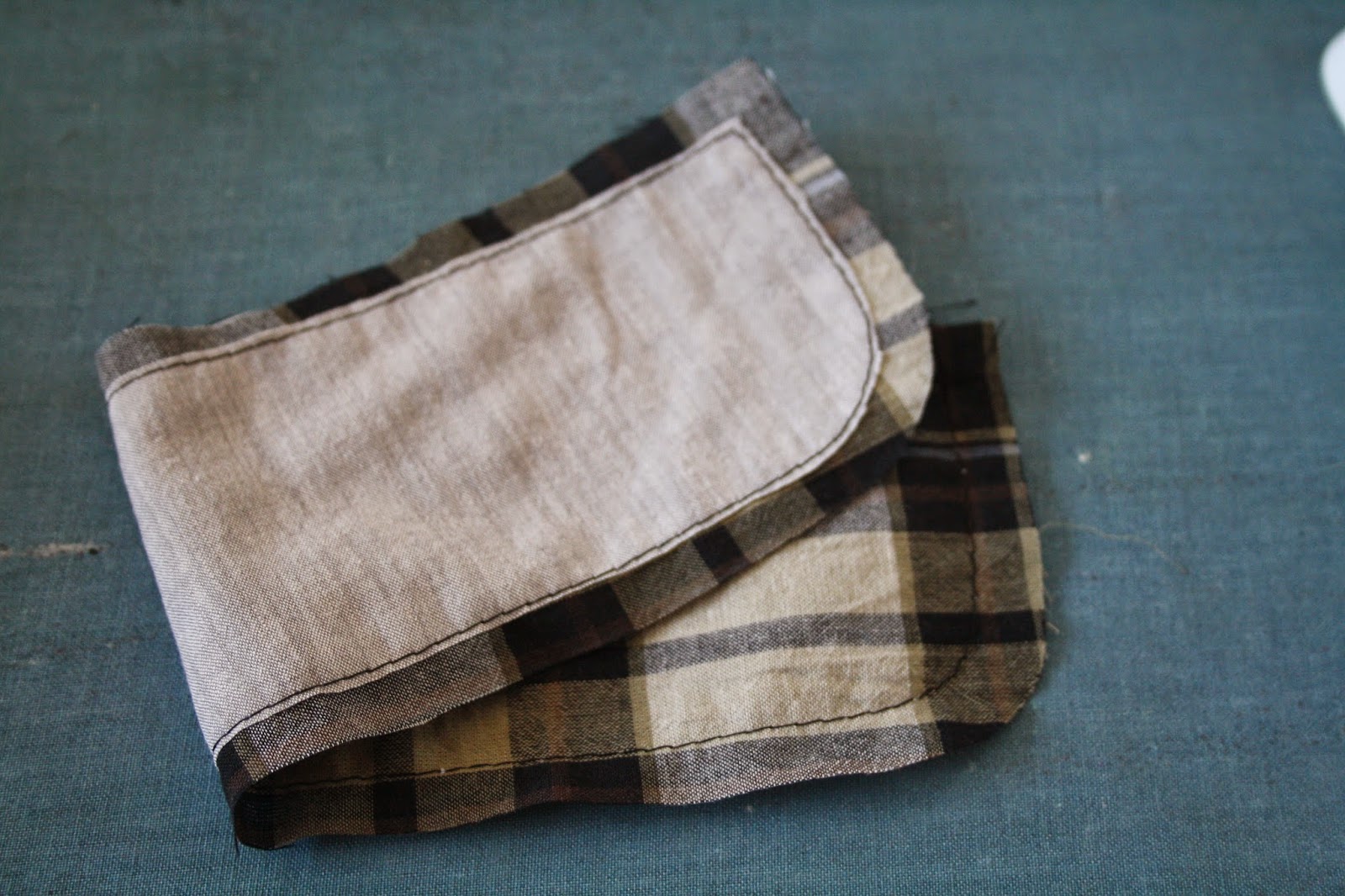
I’ve fallen in love with using fabric as interfacing recently, and as a result I don’t think I can ever go back to fusible. It always bubbles in the wash, and just generally looks like crap. For this shirt, I found some grey lightweight cotton in my stash, and I used this for the interfacing for the collar, cuffs (pictured above) and facings. I also used it for the inner yoke as a contrast, and on the inner cuffs. The cuffs were kind of an accident – I somehow didn’t realise I had to cut FOUR cuff pieces and only cut two, and by the time I realised, there was almost no plaid fabric left (I really had to Tetris that shit to get all the pieces cut out in the first place). So contrast cuffs it was! I sewed the interfacing on with a 3/8″ seam allowance, and then I trimmed the interfacing from the seam allowance as closely to the stitching as I could to reduce bulk. It worked so well, and gives just the right amount of structure to the shirt – I couldn’t be happier with the result!

Despite appearances (I wish he’d smiled in these photos!) Luke loves the shirt, and to me, that’s the best part. I get a real kick out of seeing him in it, and I’m really excited to make him more clothes! Next in line is a pair of shorts, out of some blue drill I bought. He’s not very keen on shorts, but as I pointed out, when you live in the southern hemisphere and summer comes around, you want shorts!

Standard
Uncategorized

Dotty Camilla Blouse

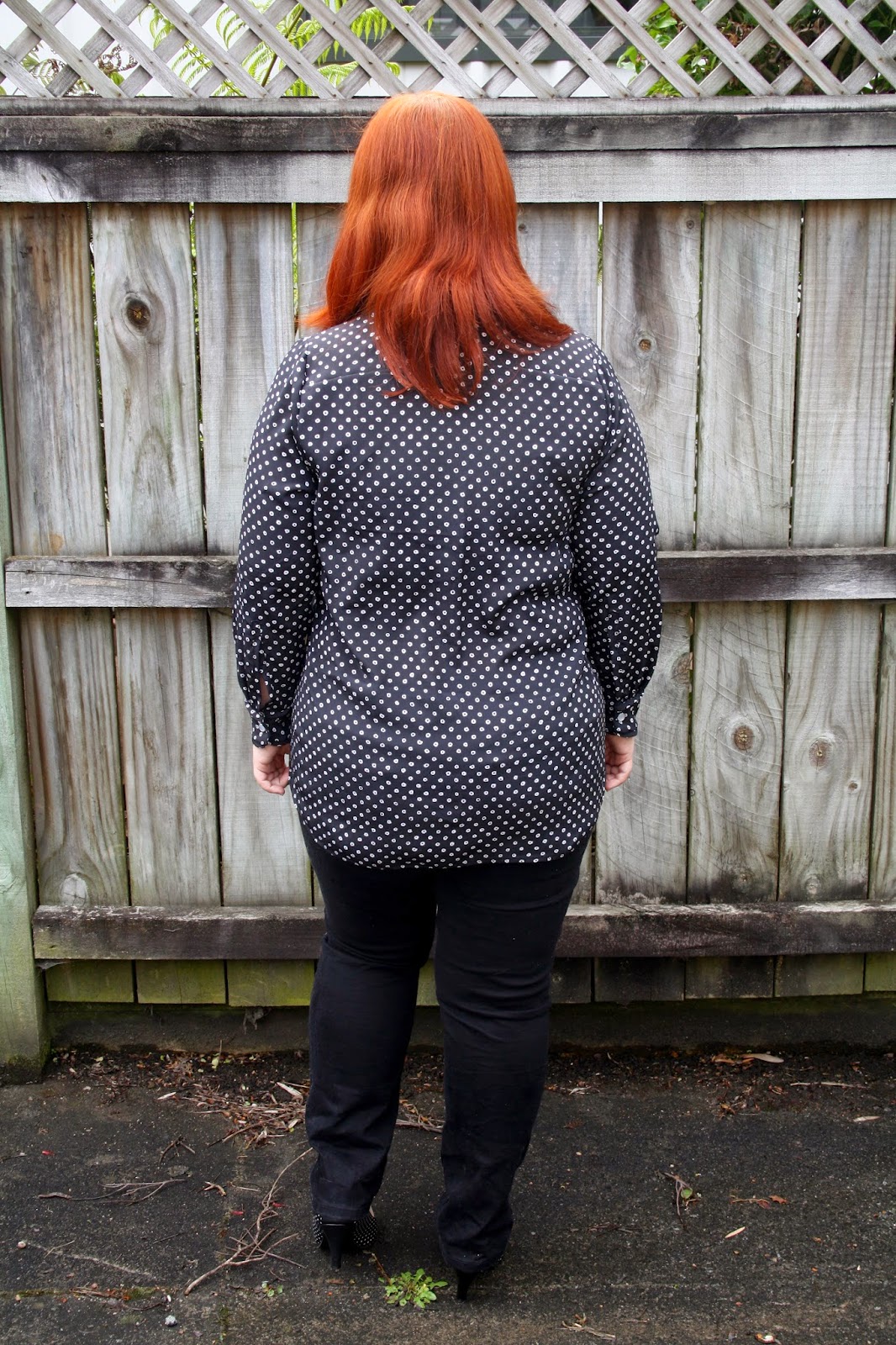
After battling with this blouse since August (!), I am so, so pleased to finally be finished with it. It is, by far, the most challenging thing I have ever sewn, due to a combination of pattern, fabric choice and sizing, but I’m pleased to say that I really like the finished version.

This was my first time using a Style Arc pattern, and it’s their Camilla blouse. Style Arc are an Australian indie sewing pattern company, and they have a pretty good variety of patterns. I’ve been wanting a popover style shirt for some time, so I thought Camilla would be perfect. As you may know, Style Arc offer single sized patterns, which was my first problem, as my measurements fell on the border of two sizes, and my upper arm measurement into another, yet larger, size. After exchanging a few emails with Chloe at Style Arc, and giving her my measurements, she suggested a 16, which is what I bought, and I also got the Emily knit top as my free pattern.

So the patterns arrived, and I was immediately a little bit disappointed at the lack of instructions. I don’t need an awful lot of hand-holding in my sewing these days, but for me part of the fun of trying out new pattern companies is to learn new techniques or ways of doing things. The instructions for Style Arc are mostly text, with one or two diagrams. They refer you to their website for further, detailed instructions, which is another issue I’ll address in a minute.

I was also disappointed due to the misleading line art on the website – the Camilla blouse seems as if it has some nice shaping at the waist in the sketches. However, looking at the pattern pieces, that is not the case. It maybe goes in at the waist by a mm, possibly a little more, but really, it pretty much goes out in a straight line to the hips.

The pattern pieces also baffled me – the front and back of the blouse are 1 large piece each – no cutting on the fold here, which to me seems a needless waste of paper. I folded them in half myself and cut them that way. Also, there were errors in the pattern – on the instructions, 11 pattern pieces were listed, but there were 12 to cut out, and the number of pieces to cut differed between the listed instructions and what was written on the actual pieces. The pattern pieces are not numbered, and the names of them are cut off due to, I suppose, there not being enough space, so you get things like “CAMILLE_BLOUSE_SLEEV” on all the sleeve pieces, which further complicates things (and looks, in my opinion, unprofessional). I emailed Chloe regarding this, and she confirmed that I had, indeed, found some errors and to her credit, she apologised and said they would be fixed, and forwarded me some photos of the finished blouse to help me out.

So it’s not all negative, I will say I liked the inclusion of a swatch of fabric as a suggestion for what to use – it’s a nice touch. And despite the errors, Chloe is very responsive when you do contact her, and happy to offer help with choosing your size.

So I made a muslin and asked you lovely people for help, and then, overwhelmed by the number of adjustments necessary, I left it alone for about a month. But it nagged at me, and so I bought more muslin, went back, and started to fix it up. I ended up making 4 muslins in total to get the fit I wanted. My first mistake was getting the 16 – the blouse was too big on the shoulders and upper chest. I should have used my high bust measurement and gotten the 14 to fix those issues, and done a FBA (which I had to do anyway on the 16). I bought Fit For Real People, which despite it’s amusingly naff photos, was a huge help. In the end, I made the following adjustments:

  • 1.5cm narrow shoulder adjustment
  • 2.5cm FBA, using Marie Denmark’s Easy FBA tutorial
  • 4cm full bicep adjustment
  • Removed 1.5cm of sleeve ease using the tutorial by Green Apples
  • Shortened the sleeves by at least 4cm, I’m not sure of the exact amount as I removed a bit more later
  • Removed 5cm from the centre back piece to remove the gathering at the back of the yoke, as it was making it billow out in a weird way
  • Added 2cm to the centre back of the yoke piece as it was straining a little across my shoulders when I stretched my arms out and subsequently 2cm to the collar to match the yoke
  • Eliminated the pocket
  • Shortened the neck split by 3cm

Phew! It was a lot of work, to be honest, some of which could have been eliminated if nested sizing was available. But I learned a lot, and I’m really super happy with the fit I have now. The only thing I would change in a future version would be to lengthen the sleeves just a tad. They’re fine when I have my arms by my sides, but when I stretch them out, they feel a tiny bit short.

My fabric choice made things ten times more difficult, too – it’s not the fabric I wanted to use for my final version. I was anticipating problems the first time I put the whole blouse together, and didn’t want to ruin nice fabric, so I used this slinky fabric from my stash – part of a huge box I bought off Trademe recently. It’s some kind of polyester, I think, and it slipped and slid everywhere, any chance it could. I cut out it with my rotary cutter and a lot of pattern weights (tuna cans), and then I used something called “ironing aid” on each piece, which made it much more stable. For interfacing on the sleeve and neck placket, I used self fabric, as I’m not a big fan of fusible interfacing. For the collar, I used some (quite expensive) tricot interfacing I got locally for a wool skirt, which worked wonderfully. I didn’t interface the seam allowances to reduce bulk.
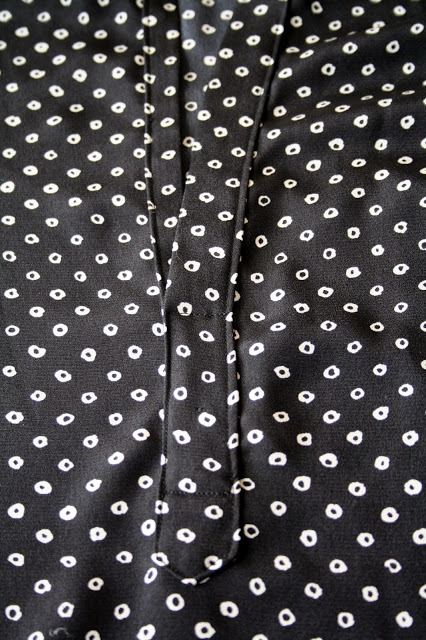
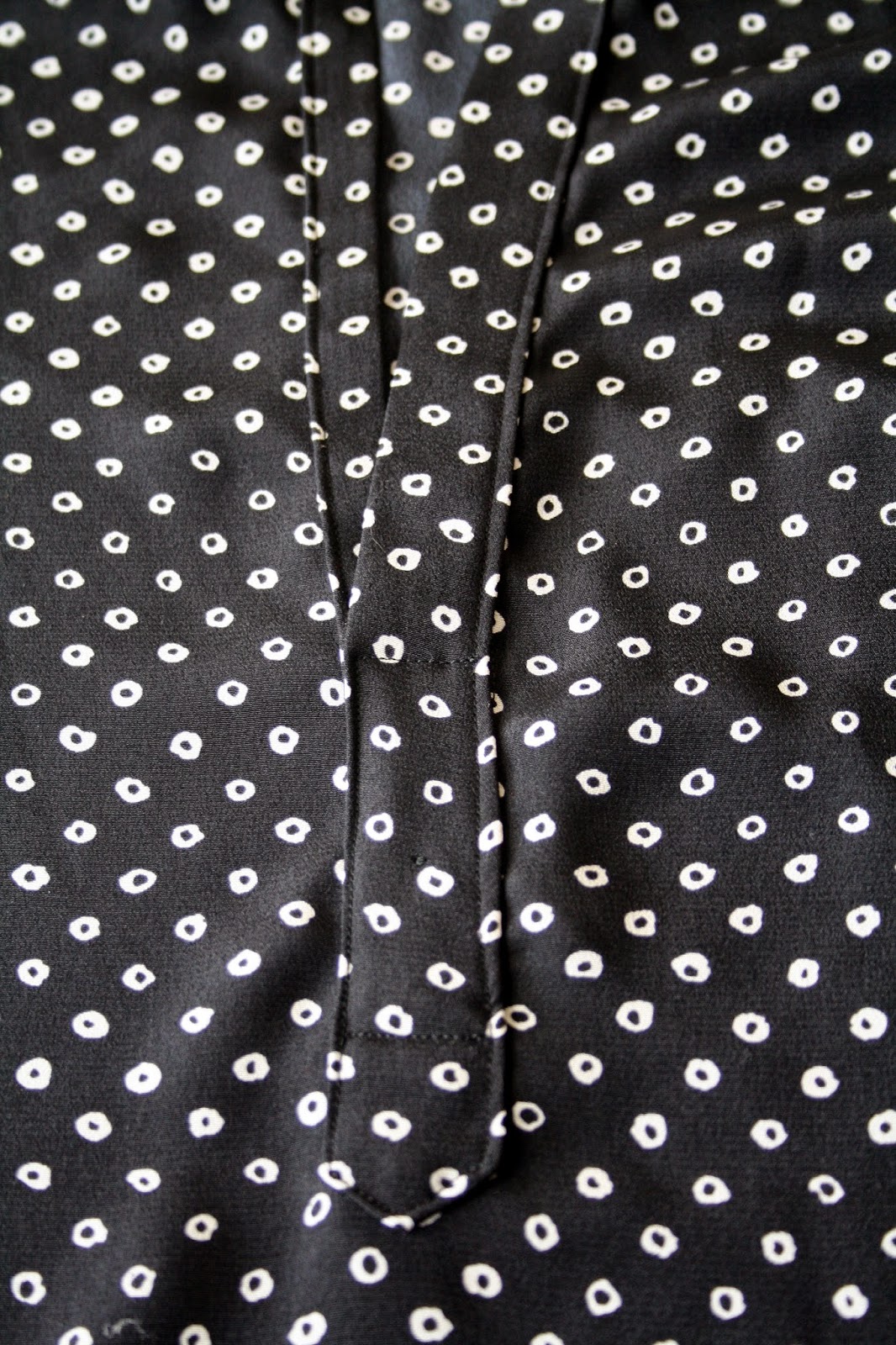
When it came time for the neck placket, I went onto Style Arc’s website as the instructions directed, to their section on neck split tabs and sleeve plackets. Unfortunately, it was no help, as the instructions are general, not tailored to each pattern, and the pattern piece for the Camilla blouse neck placket does not resemble anything in their tutorial. So I drafted my own placket piece like a larger version of a sleeve placket using the tutorial by Off the Cuff, and sewed it using the absolutely fantastic video by Pauline Alice (it’s for her Carme blouse, but it’s very useful for any neck placket, I would think), and I’m so proud of how it turned out. It looks a little off-kilter in this photo, but that’s due to the fabric slipping around – it’s straight, I promise! You’ll notice it’s sewed up twice – once where a placket is usually anchored, and then again further up. This is due to my sewing machine absolutely REFUSING to sew a buttonhole in this fabric, and me giving up and just stitching it closed. I can still pop the blouse on easily, and it’s not indecent in the cleavage area. Win win. I might sew some buttons on it later on.
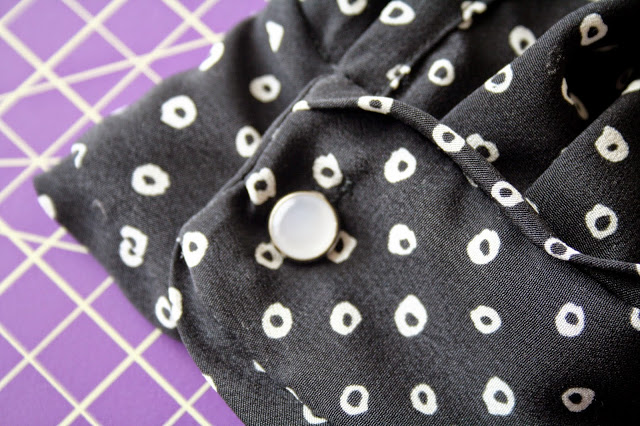
Of course, I had the same buttonhole issue when it came to the cuffs, but browsing Instagram one day I saw someone mention snaps as an alternative to buttonholes, and I thought that was the perfect solution. I ordered some pearl snaps from a local sewing shop, and a press tool, and they just arrived today. They were fantastically easy to apply (I was gentle with the hammer though, I’ve heard horror stories of people smashing the snaps with too much force!) and they look great. Problem solved!
So if you’ve stuck with me through this long and wordy review, I appreciate it. I feel like I’ve been helped by so many people through this project, through blog comments, tutorials that other bloggers have made available and advice through social media, and I really am happy to be part of such a helpful community with so many resources available. 
As for whether or not I’ll try another pattern from Style Arc, sadly I’m not sure that I will. I probably will sew the Emily top, as I already have the pattern now and sizing is more forgiving in knits, but I’m really put off by the single sizing, pattern errors and lack of instruction that comes with them, considering the price.

Standard
Uncategorized

Just another blog hop, move along if you’re tired of seeing them!

I know that by now, the sewing blogosphere is getting a little bit tired of the whole blog hop thing. So I apologise in advance for hopping on the bandwagon (pun intended), but my good friend Chuleelan over at CSews nominated me and it would be rude to refuse! I met Chuleelan when I lived in Berkeley, and she’s a lovely person, and a great seamstress, too. Basically, if you’re not aware, the blog hop (or this one at least) is just four questions about the blogging process. So let’s hop to it!

1. Why do I write?

Why indeed. I write because I enjoy it. I’ve always enjoyed writing, from when I was a small child writing about otter tea parties, to my Livejournal I’ve had for the past 14 years. I write this blog, specifically, because I like to show off my sewing creations and be part of the sewing community. It’s nice to share a hobby with others who enjoy doing the same.

2. What am I working on?

I’m almost finished the interminable StyleArc Camilla blouse, which I asked for fitting help on, oh, back in August. I’m very much the opposite of fast fashion right now, it would seem. The whole thing has been an uphill battle from start to (very nearly) finish, and I’m just waiting on some snap buttons to arrive in the mail to be done with it. I’ve also cut out the PDF pattern to make Luke a Colette Negroni shirt, which I’m pretty excited about making! In non-sewing-but-still-crafting news, I’m halfway through knitting a sweater my Mom showed me in a Spotlight magazine, which is what I do in the evenings when my sewing has gone tits up yet again.

3. How does my blog differ from others in its genre?

I’m not really sure that it does. I’m not bothered by this, though – I never’t set out to make an violently different sewing blog. It’s just stuff I like to make, usually cute, and rambling on how I made it. 

4. How does my writing process work?

I start with photos. Usually three or four, sometimes a couple of extras if the inside of the garment is worth displaying. Then I just type up the rest around those, trying to cover all the aspects of construction, type of fabric, cost, pattern review – those kind of things. I don’t plan it much, or read over it after I’ve written it – it’s just off the cuff. 
Every once in a while I’ll feel a bit stressed that I haven’t blogged in a while, and think maybe people will forget I exist, and think about making a more introspective, navel-gazing blog post, but I usually resist the temptation because I figure I’d rather have good content worth waiting for than boring drivel no one wants to read. 

Now comes the part where I’m supposed to nominate two other bloggers to answer these questions, but I feel like everyone on my sewing blog feed has already done it (or maybe it just feels that way(, so I’ll pass on that part of it. 

 Hopefully I’ll actually have a finished garment to show off soon!

Standard
Uncategorized

Telegraph Avenue Renfrew

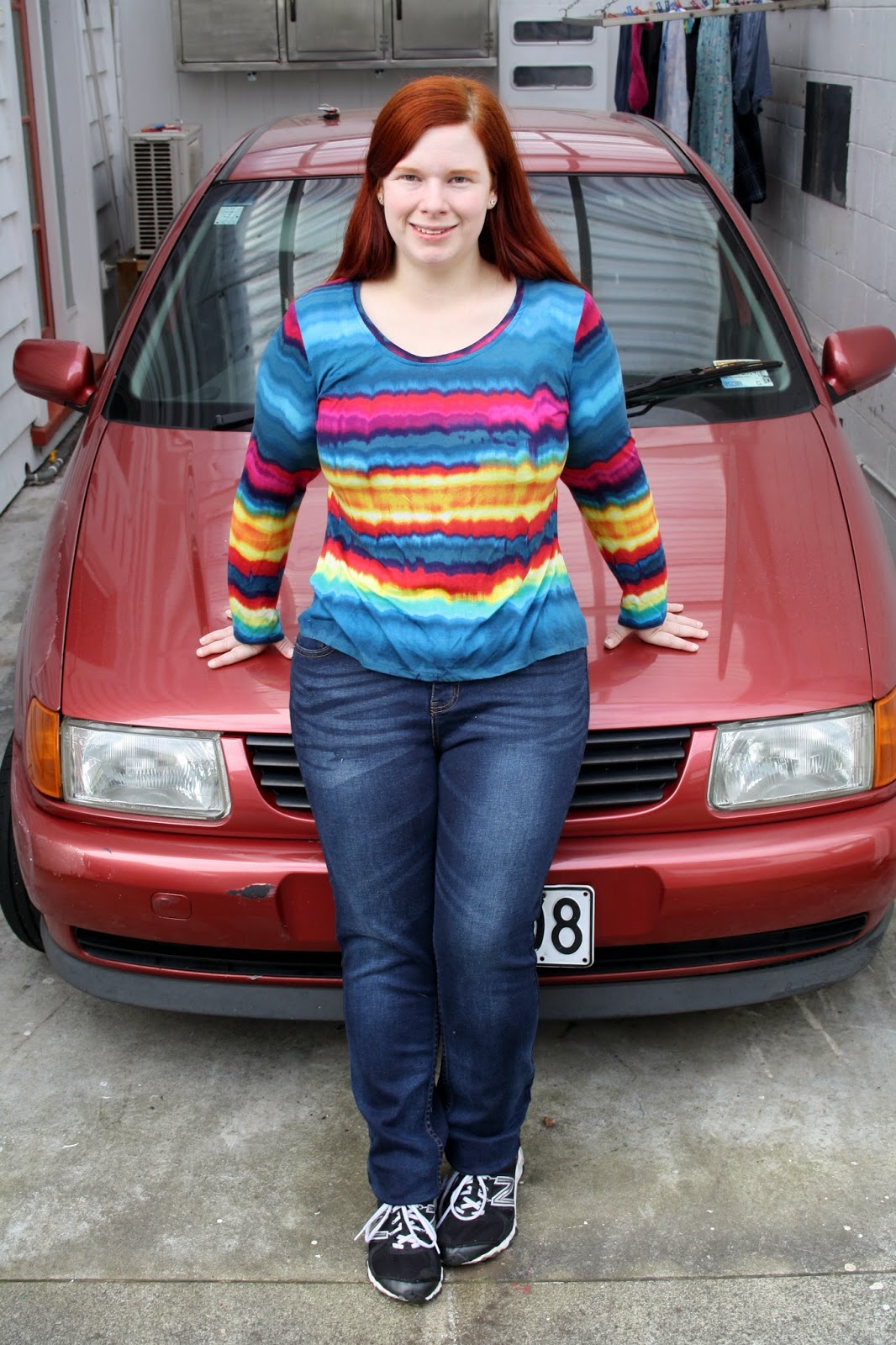
A little while back, I bought the Sewaholic Renfrew top pattern after being convinced of its awesomeness by Penny of Dresses & Me. Well, her and every other blogger that’s made one, which seems to be pretty much everyone at this point. I wear long-sleeved tops a lot, both on their own and under jumpers/cardigans/sleeveless dresses, so I’m not sure why it hasn’t occurred to me to buy this pattern before.

I promptly went out to The Fabric Store where they were promising half price Merino knit, and came out with this fabric. After fondling almost every knit fabric in the store and getting more and more dejected that I wasn’t loving any of it (or being horrified at the price), some girls finally moved away from the end of a table and I moved in and saw it. And I knew, straight away, it was mine. Luke thought I’d lost the plot, and I can’t blame him. In general, this is absolutely not something I would usually wear or pick out for myself. But for the past two and a half years, I lived in Berkeley, California, a town with quite the radical, hippie history. And on Telegraph Avenue on a Sunday, you can buy all manner of ridiculous tie-dyed clothing from very…interesting individuals. I didn’t partake of any tie-dyed madness while I was there, but I miss living there a great deal, and this fabric reminds me of the wonderful memories I made while I lived there, and the amazing people I met.

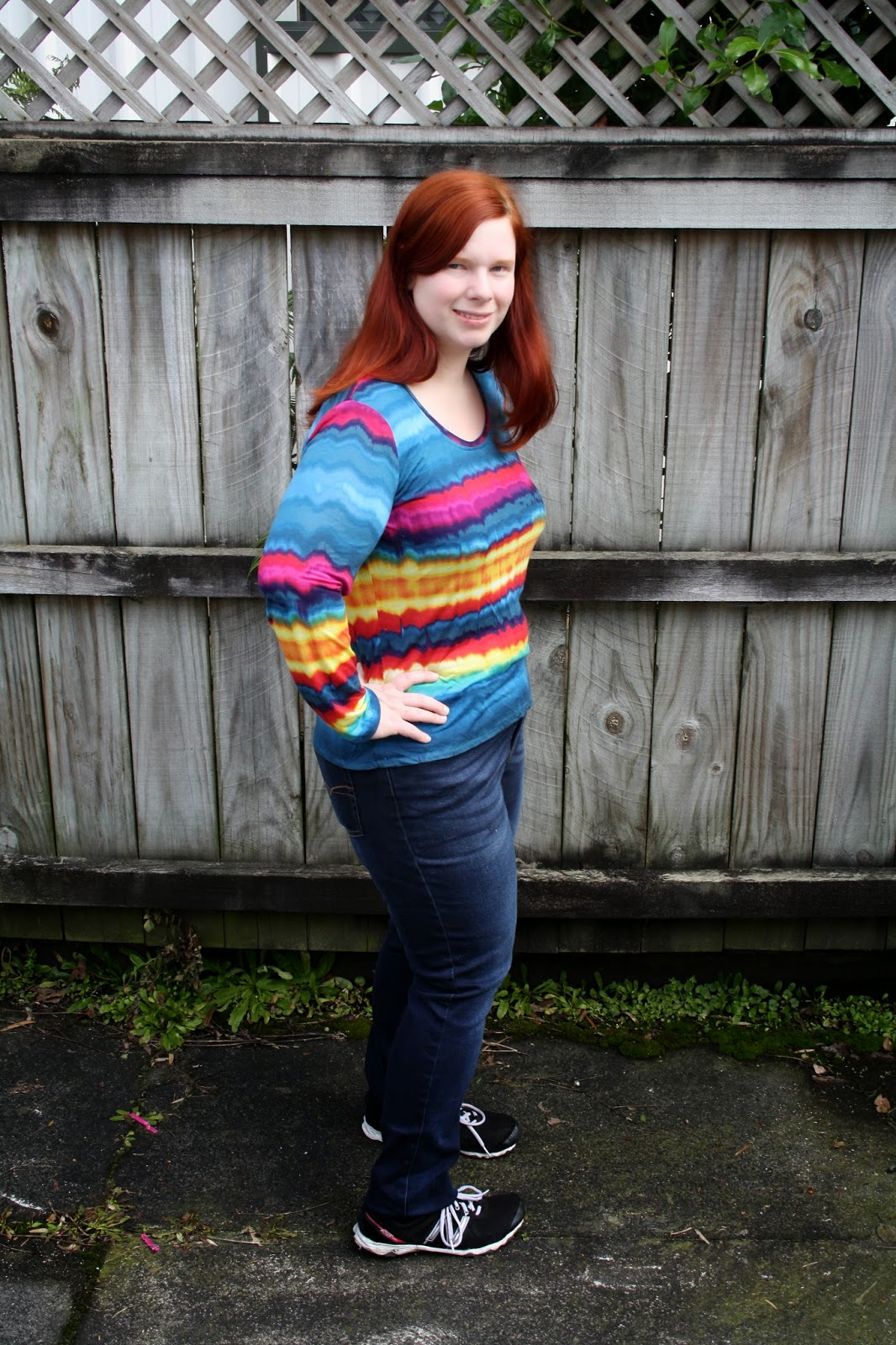
What it’s actually made of, I don’t know. It didn’t have a tag on it – the sales girl had to ask someone about the price, because it didn’t have a price tag, either. It’s very, very soft and drapey.And stretchy! It was perfect for the Renfew. I made it in a size 14, but I feel like I could afford to size down in the waist. I shortened the sleeves quite a lot and did intend to add the cuffs, but when I tried it on, they were perfect as is, so I just folded over and hemmed them. I did not intend to add the waistband, figuring that since I’m short, it would be long enough. That was an error in judgement, as it’s just a tad too short for my liking. I mean, it’s fine, it doesn’t show my tummy or ride up or anything, but all my life my tops have come down past my hips, so I’m not used to this length. That said, I don’t particularly like the look of the waistband, so I think I’ll just lengthen it next time.

I made sure to match the pattern at the side seams and on the sleeve seams, and that seemed to work out pretty well. I deliberately didn’t match it where the sleeves meet the bodice, as I wanted the pattern broken up when I put my arms by my sides instead of running all the way along. I like it better that way.

It was a pretty easy make – except for the neckband. Ugh. I cut it out according to the pattern pieces, but as I was sewing it on, it seemed like I didn’t have to stretch it that much. I remembered making the Lady Skater that I needed to stretch it a LOT to sew it on, and then when done, it was nice and taut. Sure enough, when I finished sewing the Renfrew neckband, it was floppy. I unpicked it and tried again, only this time I stretched it a lot and just cut off the excess. Much better! I stabilised the shoulder seams with some old cotton selvage I had lying around, as I didn’t have any twill tape.

It was a nice quick make, and I’m looking forward to making some others in more…sedate colours to replace my old, stretched Old Navy and Gap ones that are currently in rotation.

Standard
Uncategorized

Camilla Blouse: Fitting Help

I’ve fallen a bit behind in this blogging business, but rest assured, I have been sewing. I’ve got two finished items ready to be photographed and blogged about, and many more projects on the horizon. Blog photos were, in fact, meant to happen today, but it was pouring with rain most of the day, and even though the sun’s out now, my hair is unwashed and I’m in my pajamas. Oh well.

One of the projects I’m working on is the Camilla Blouse by Style Arc fabrics. It was originally going to be for The Monthly Stitch Mono-sewn challenge, but buying the pattern and shipping took longer than I thought. Such is life. I just made my first muslin of this today, after making one change beforehand – a 4cm full bicep adjustment. I thought I’d post pictures of it, both to (hopefully) get some advice on further changes that need to be made, and also to show a bit more of the process that goes into a finished garment.

I don’t always make a muslin when I’m sewing a new project, and my willingness to bother with it usually depends on how attached I am to the fabric I want to use for the finished garment, and how fitted the garment is. This time, since it’s an indie pattern company I’ve never tried before, and I’m loving the fabric I’ve chosen for the finished blouse, a muslin was a must.

Incidentally, I realise these photos are not flattering. My hair needs a wash and white is not my colour. But let’s push on anyway!

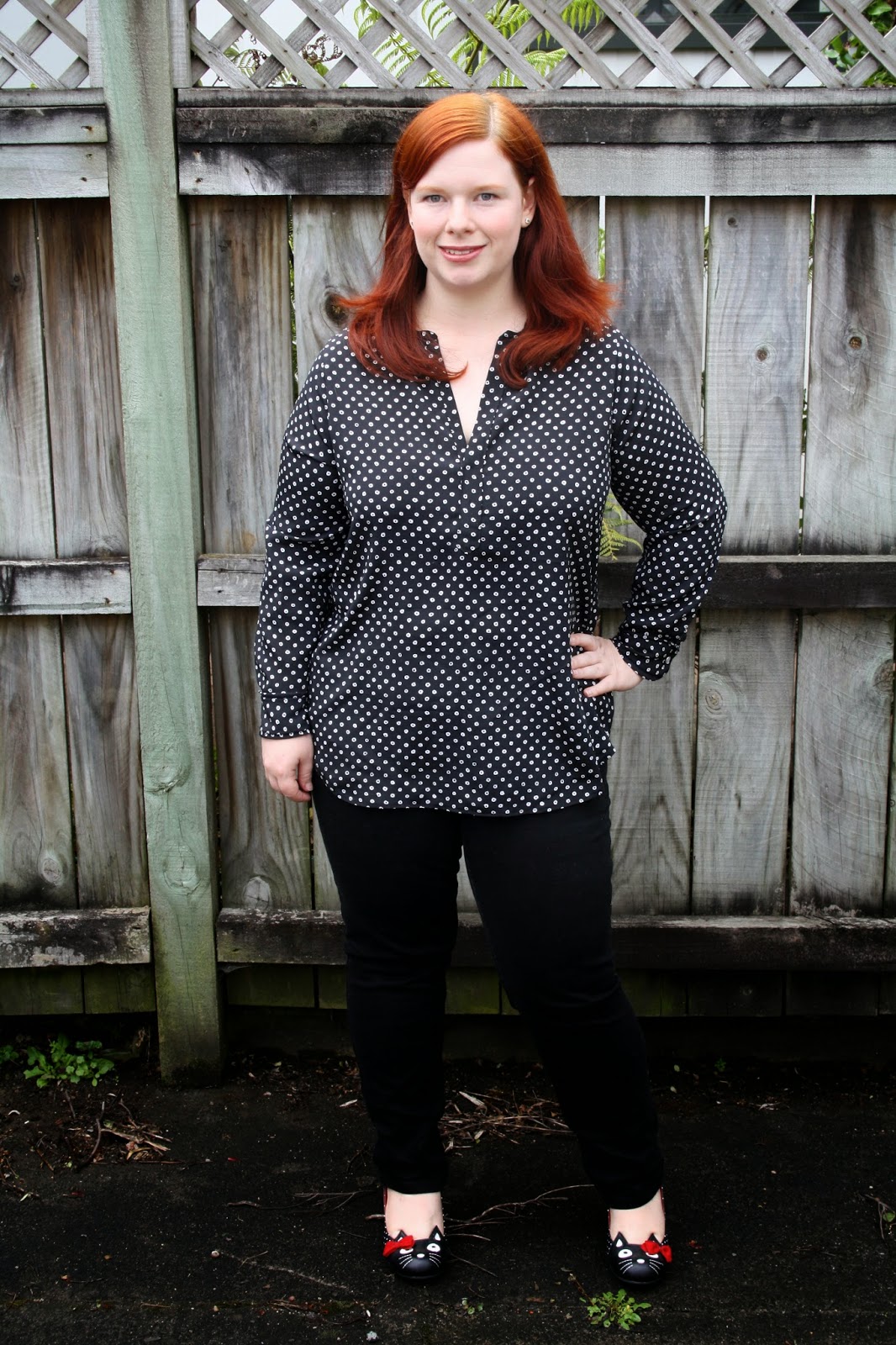
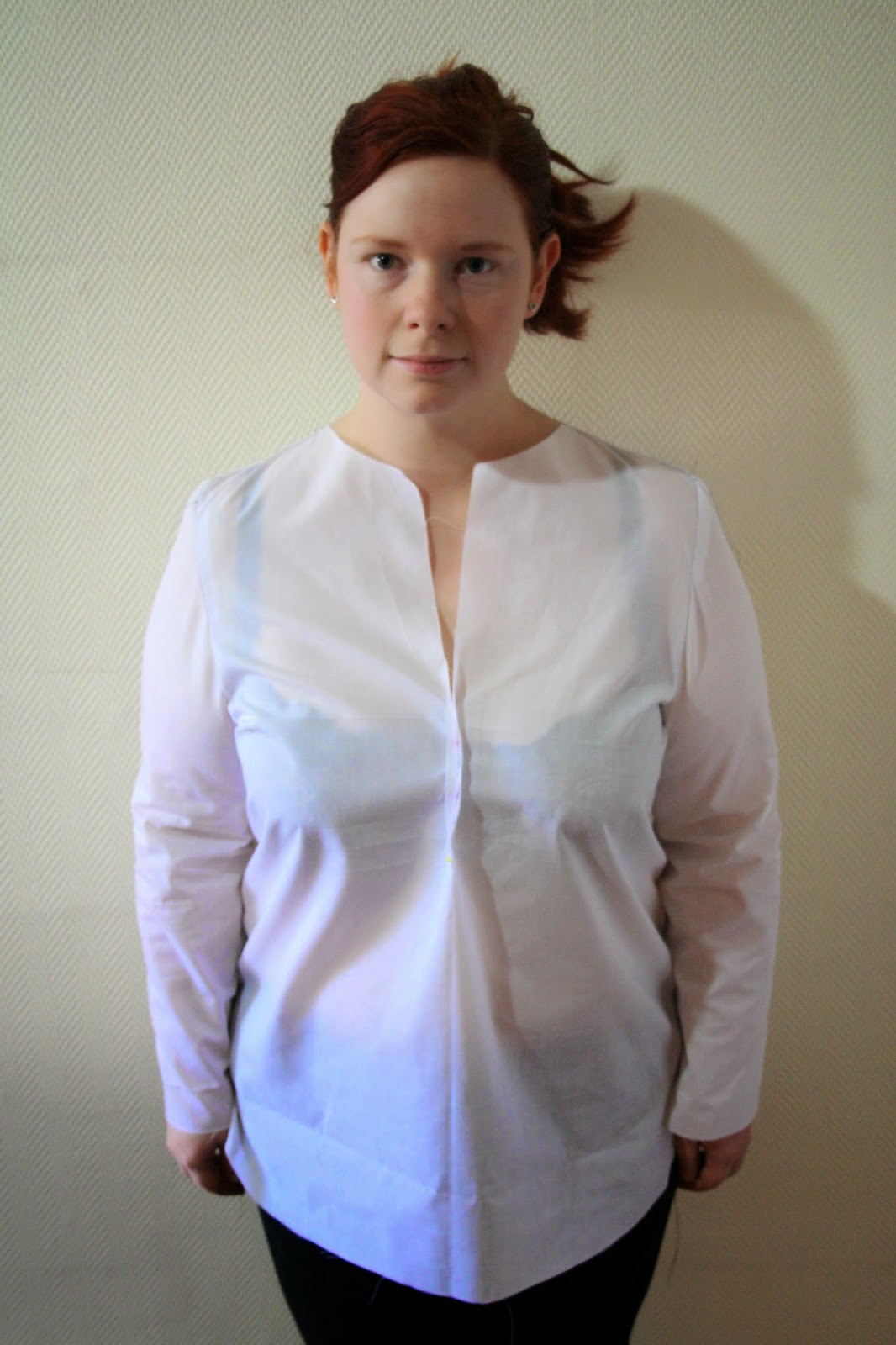
This is the front view. The blouse has a placket on the front with buttons on the lower half, which I didn’t bother with for the muslin – I just pinned it. You can see that with it pinned, it is slightly too tight across the bust, with diagonal lines coming from the shoulders downward. It’s quite roomy through the waist and hips, but the fabric I’ll be using is a soft, drapy voile so I think that won’t be so noticeable then. I’m thinking maybe I need to do a small FBA to fix the tightness in the chest and upper back area, and also a tiny narrow shoulder adjustment. Possibly add 1cm more to the full bicep adjustment? It’s uncomfortable if I stretch my arms out in front of me, especially across the back.

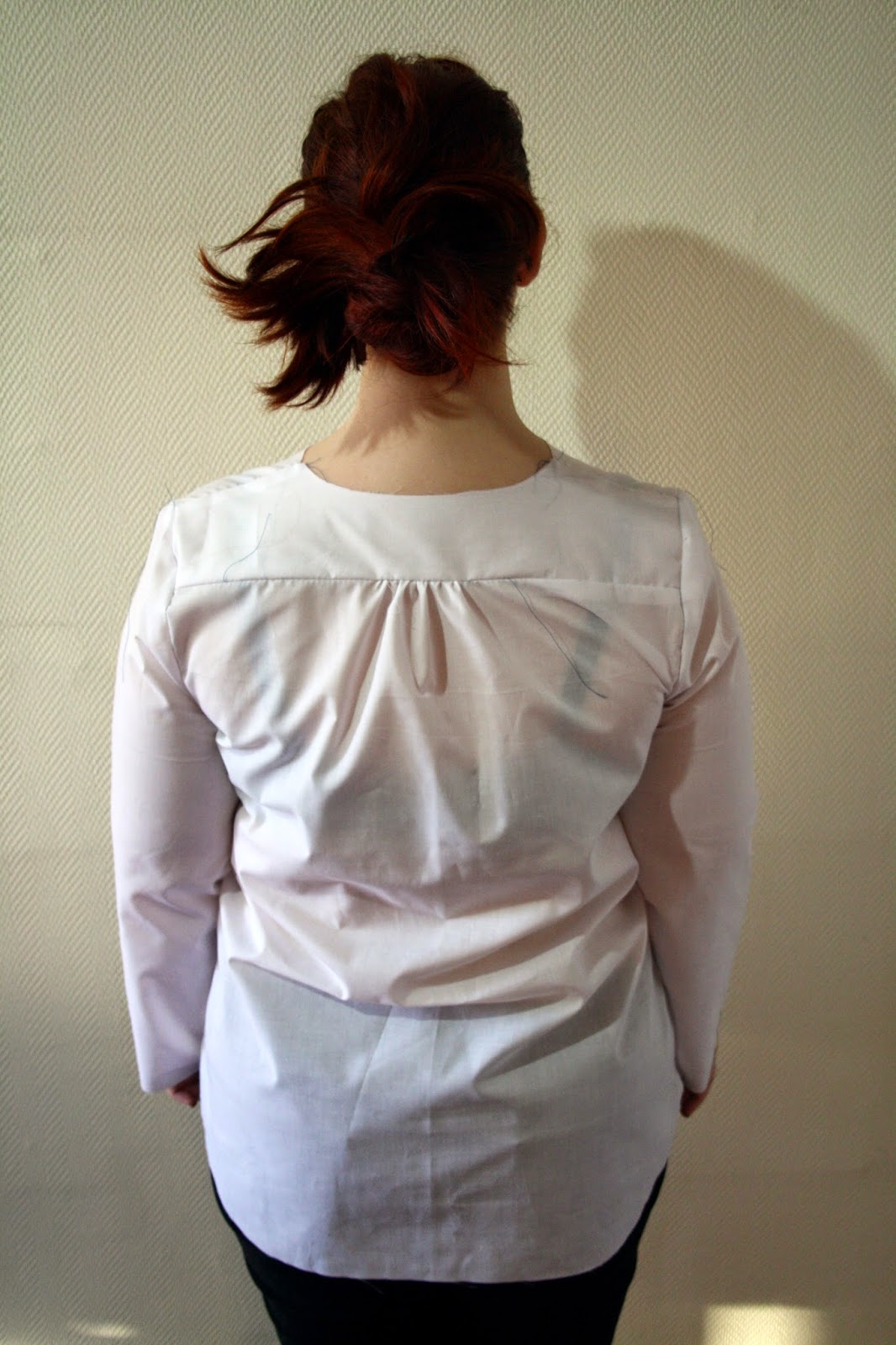
Back view. You can see there is a HEAP of fabric pooling around my lower back – I need to sort that out somehow. Some sort of swayback adjustment? You can also see it’s pulling across the lower back down towards the armholes – will this be fixed by an FBA? Or do I need to do something to the back itself?

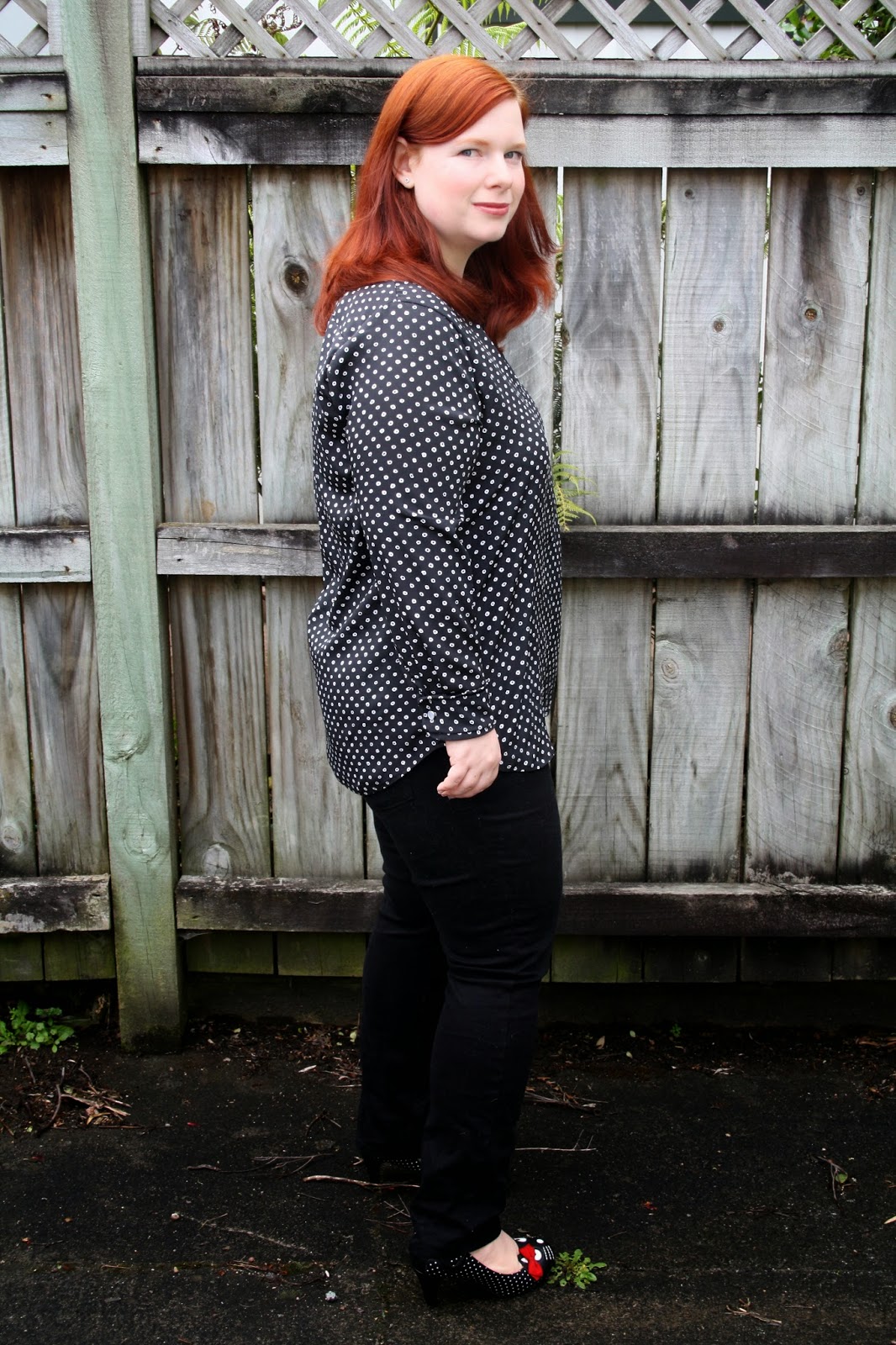
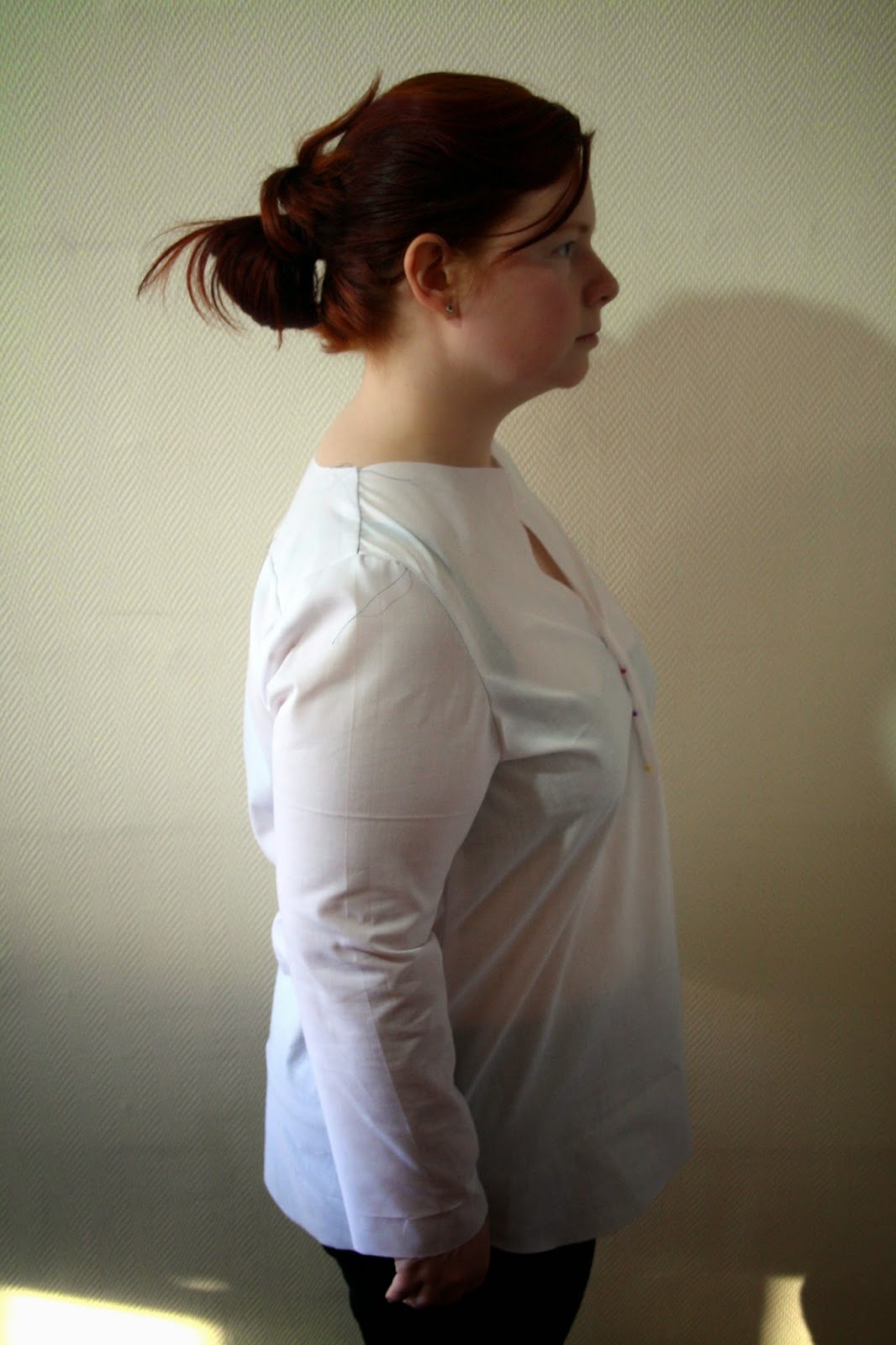
Side view. Despite all the tightness in the upper part of the blouse, you can see there’s also excess fabric sitting around the armhole on the front, and a little towards the back. And all those diagonal lines under the bust towards the side, too. Ugh.
So, can anyone help? I can’t go down or up a size without buying a whole new pattern (don’t even get me started on the whole one size thing Style Arc have going on), so I’m only able to alter the size I have. I appreciate any and all advice!
Standard
Uncategorized

A thank you, and a new addition

I know I’ve been a little absent around these parts lately, but never fear, I’m back now. I had grand plans for the month of June, including entering every competition for The Monthly Stitch Indie Pattern Month! Although I did get an entry in for the first one, I got buried in work shortly after and had to abandon all sewing for a few weeks.

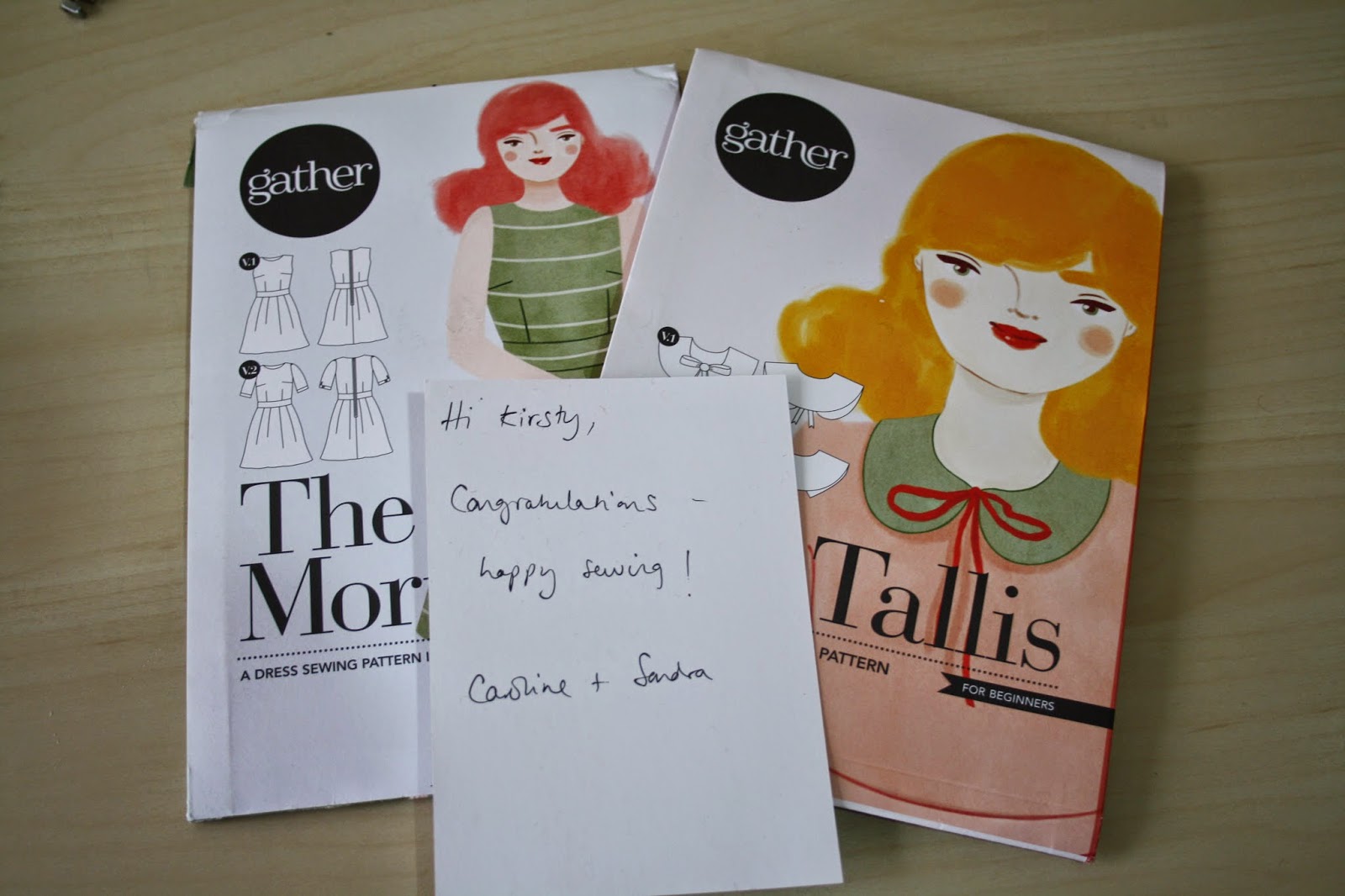
However, thanks to you wonderful people who voted for me, I did win a prize for the one competition I entered!

I won the Mortmain Dress and the Tallis Collar, both from Gather. I’m dying to try them out, the Mortmain is just my style! Even though I couldn’t enter any further contests, I’ve had great fun looking at what everyone else has entered, and voting every week. There have been some stunning makes!

And now, I’d like to introduce you to the newest member of my sewing family…

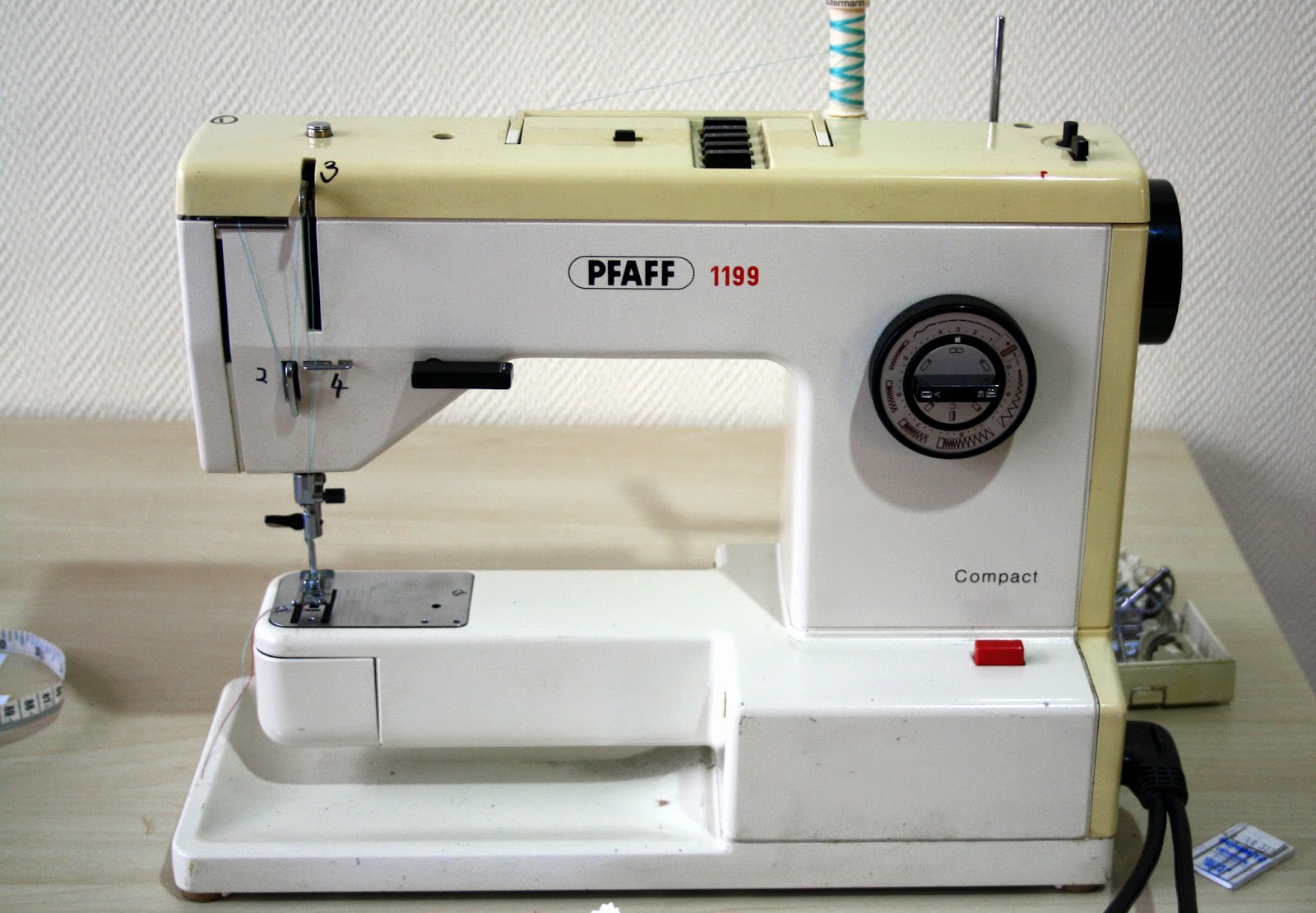
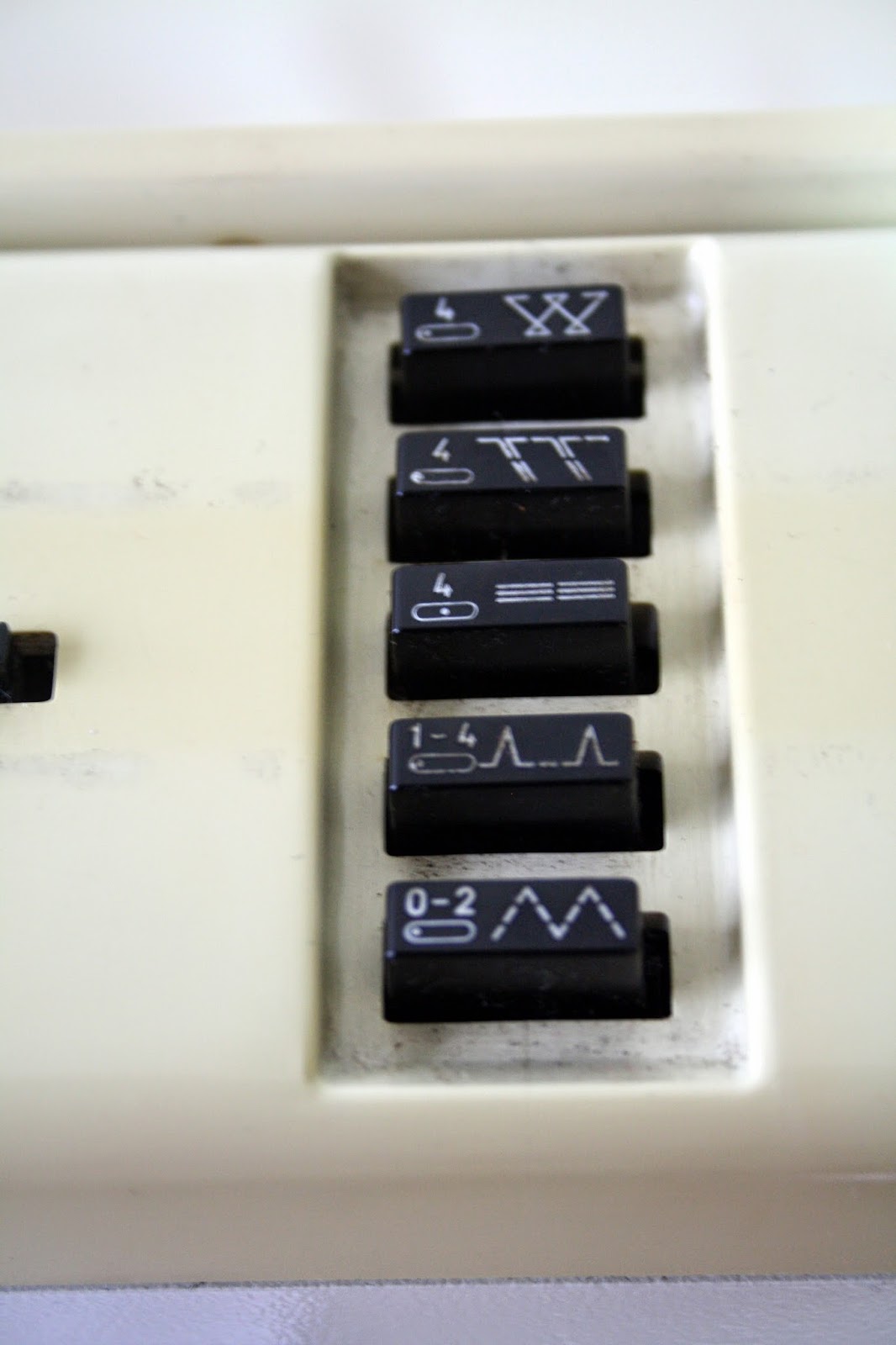
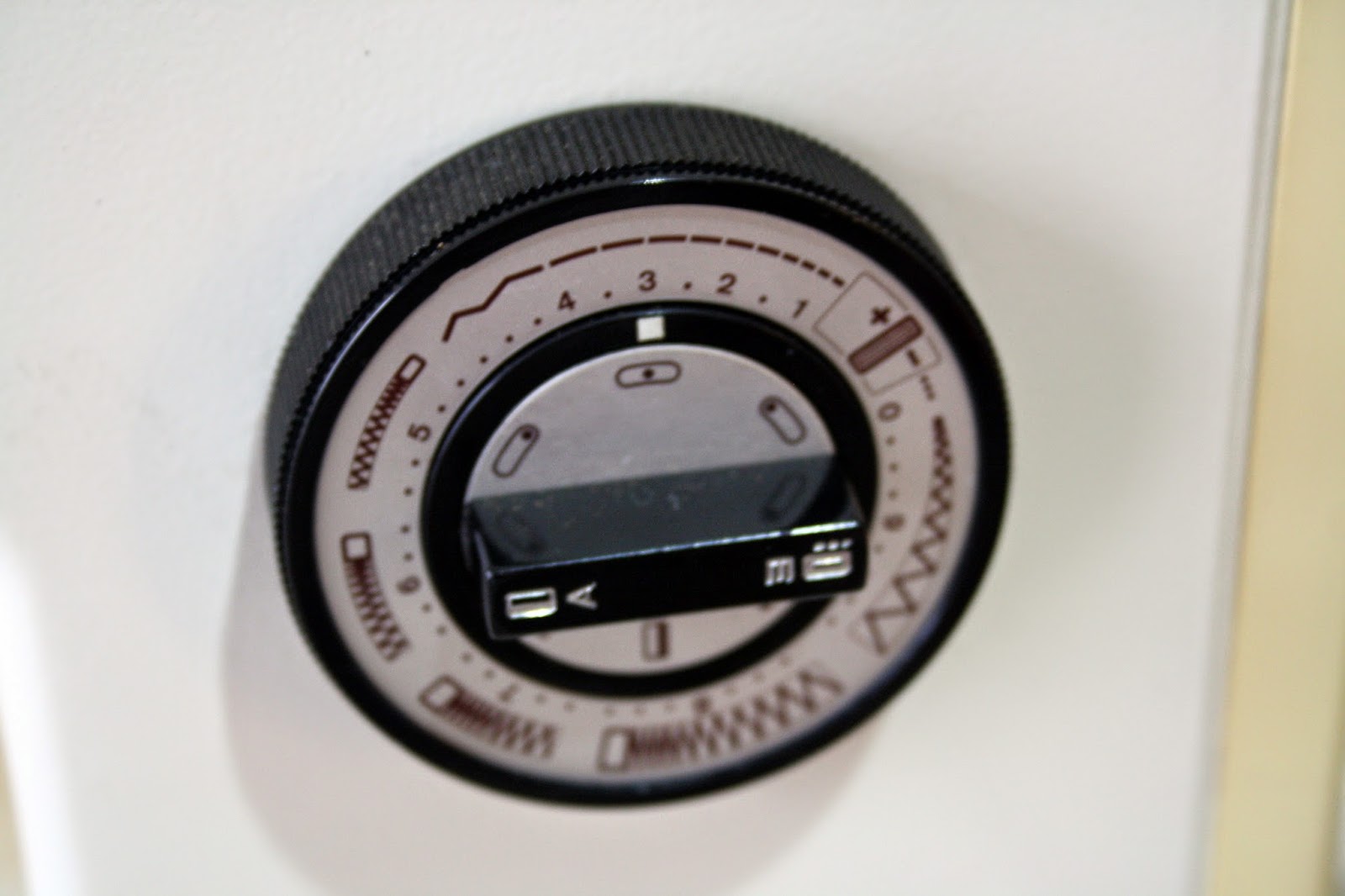
This is a vintage Pfaff 1199 Compact that I acquired yesterday from a truly spectacular secondhand shop. After climbing over ladders and tiptoeing over sodden rugs, I spied this little beauty in a corner of a shelf. The owner let me test it, and all seemed well, so I handed over $45 and it was mine!

I gave it a thorough wipe with a damp cloth, and then unscrewed the needle plate and went to town with a little brush. I got a heap of lint and dirt out, and I was going to oil it, but stopped when I read in the manual that apparently you shouldn’t oil it!

Then, the test…I got some scrap fabric, threaded the machine and bobbin, and tried her out.

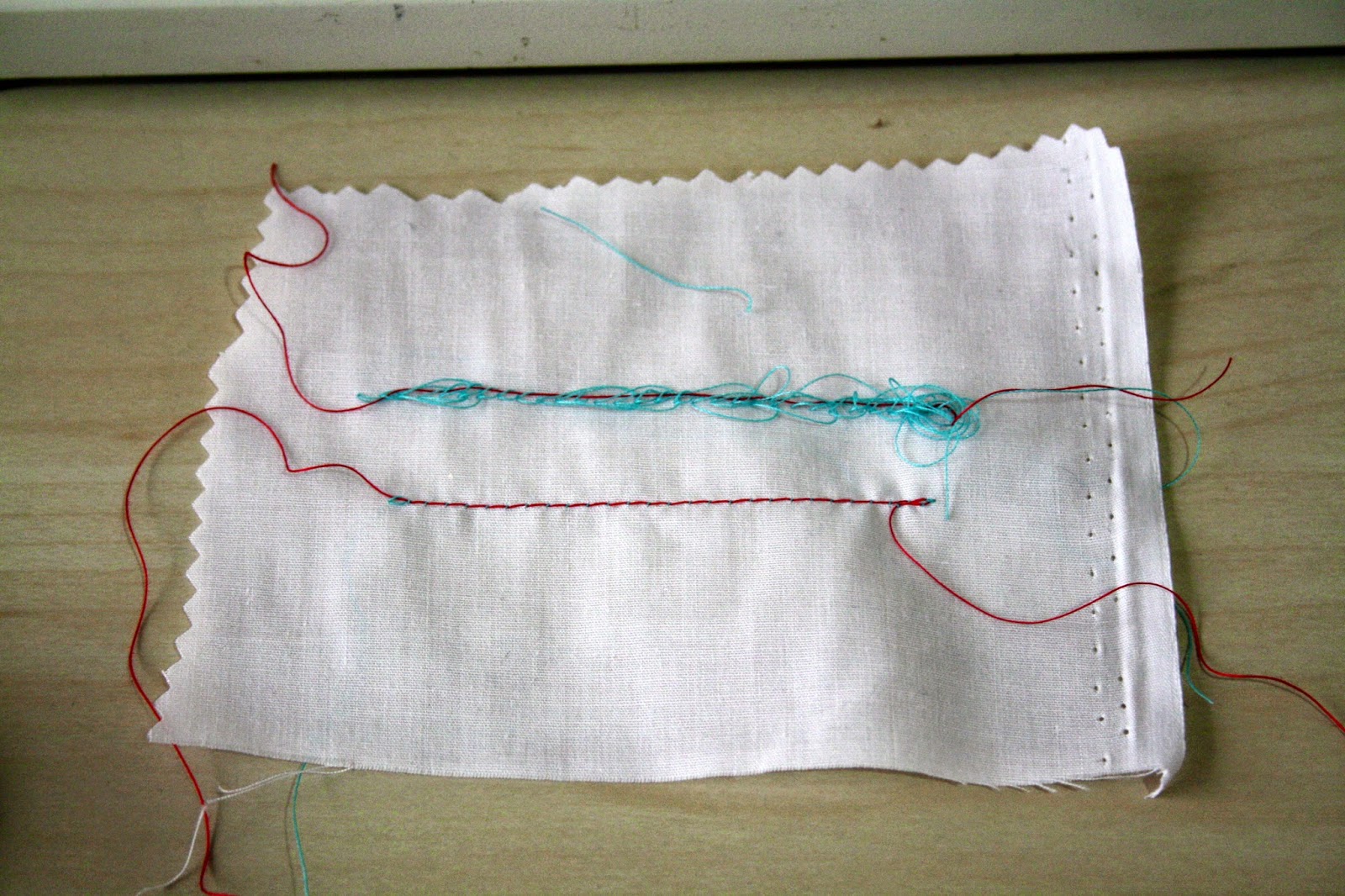
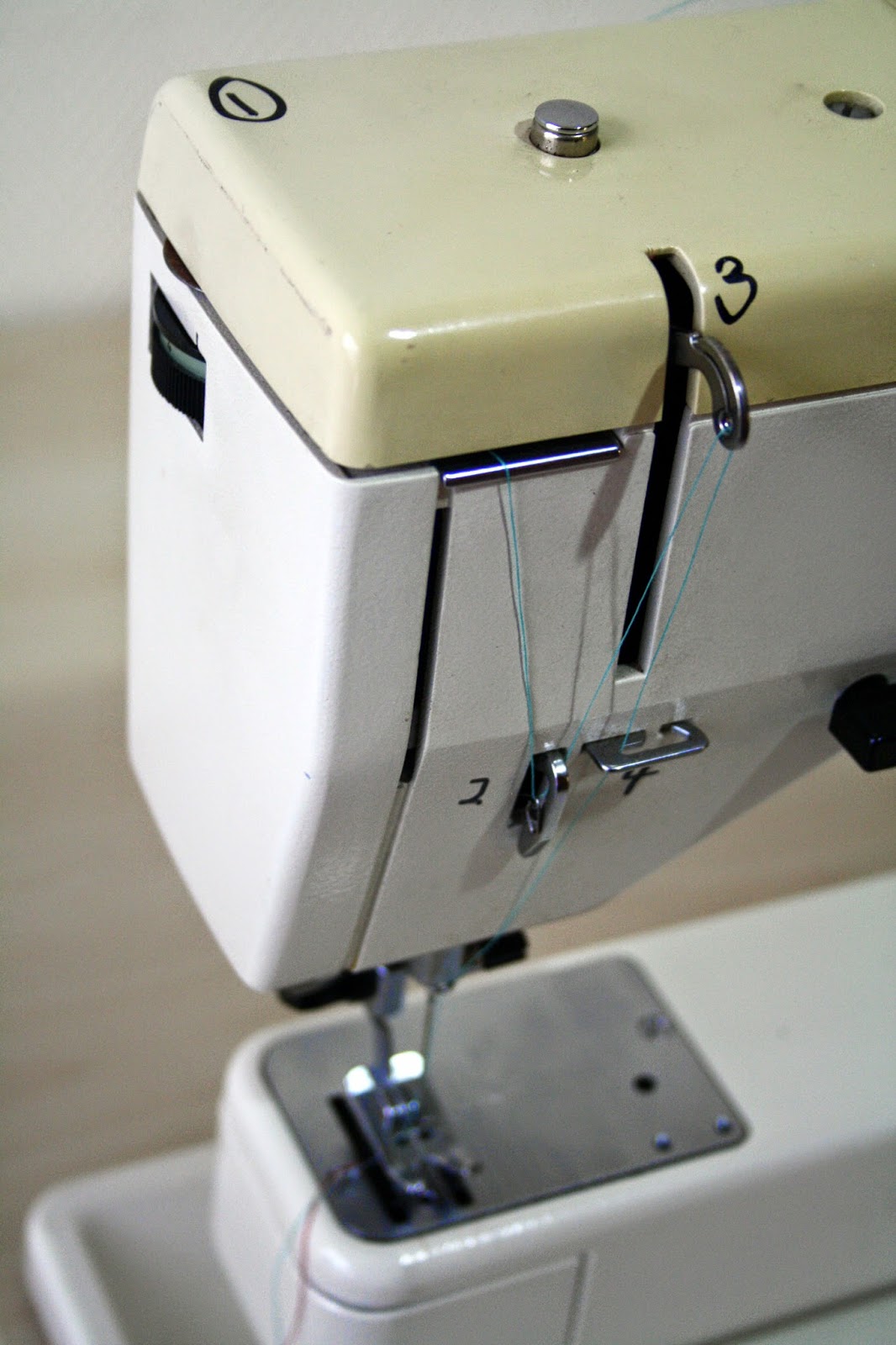
That first row of stitching was what happened. And there are many more, similar lines of stitching that occurred afterwards. I changed the upper thread tension. I changed the bobbin tension. I’ve never touched a vintage machine in my life prior to this, nor have I ever touched a sewing machine tension control, so I was a bit out of my depth. My copy of the manual is so badly photocopied that the guide on how to thread the machine is basically useless. In the end, I threaded it for the millionth time, but sharply pulled the thread under the little disc on the side. And lo and behold…I got that second row of stitching. Hallelujah!

My now correctly (I hope) threaded Pfaff! The numbers in texta are not mine, they came with the machine, and quickly frankly weren’t any help.
 

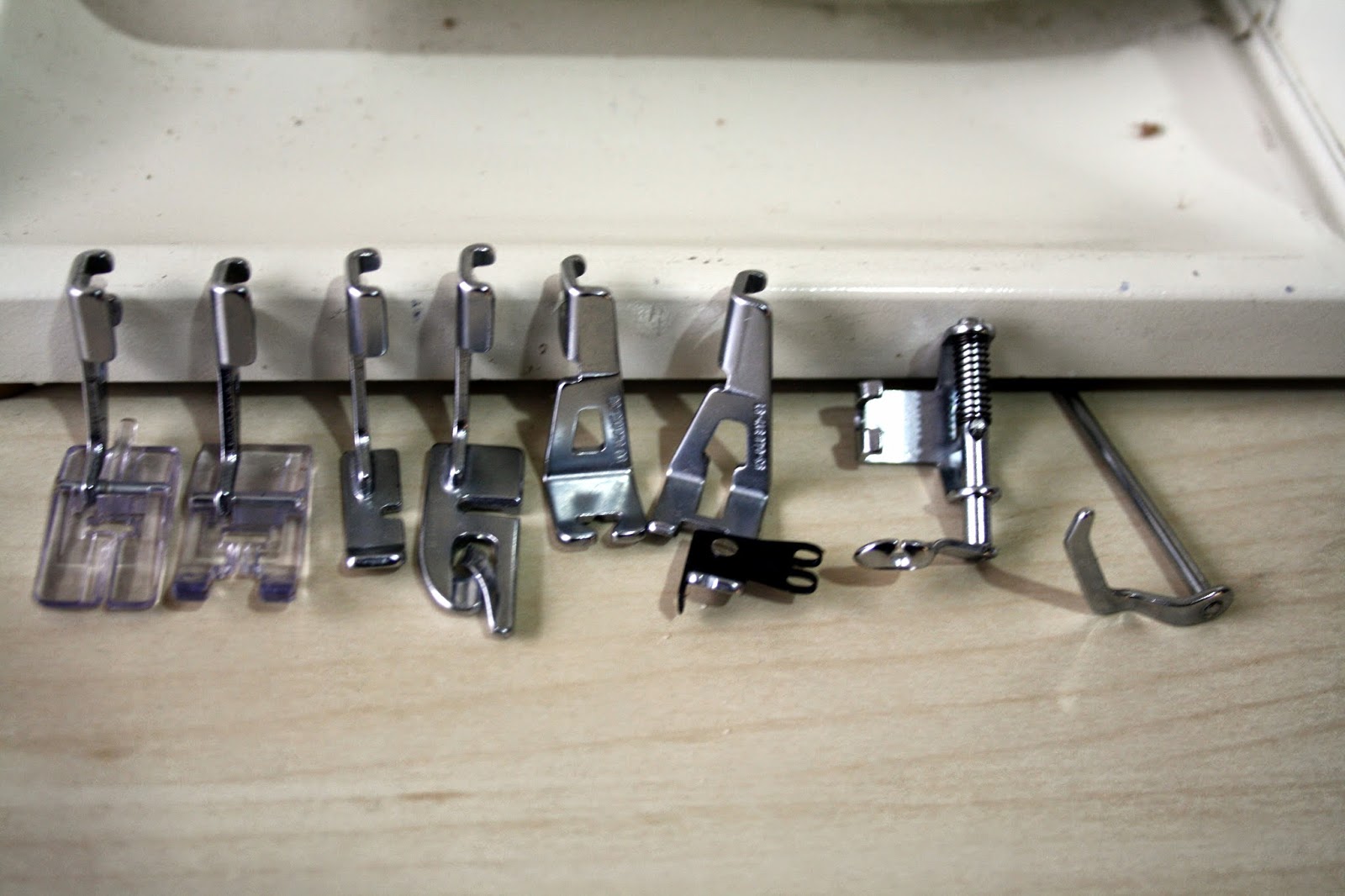
I also got all these feet with it! And some mouse droppings, but let’s not talk about that. Shudder. From left to right, we have:

  1. Buttonhole foot
  2. Clear view foot (if this has any other function, the internet doesn’t seem to know what it is)
  3. Edge stitching foot
  4. Rolled hem foot
  5. Cording foot
  6. Blind stitch food
  7. I believe it’s a free motion quilting foot
  8. Seam guide

Thanks to all the lovely folks on Twitter/IG who helped me try and identify the feet!

So now I have two working sewing machines, which is going to make switching between projects a lot easier! Now I just have to get an overlocker, and I’ll be set.

Standard
Uncategorized

Come Sail Away With Me!

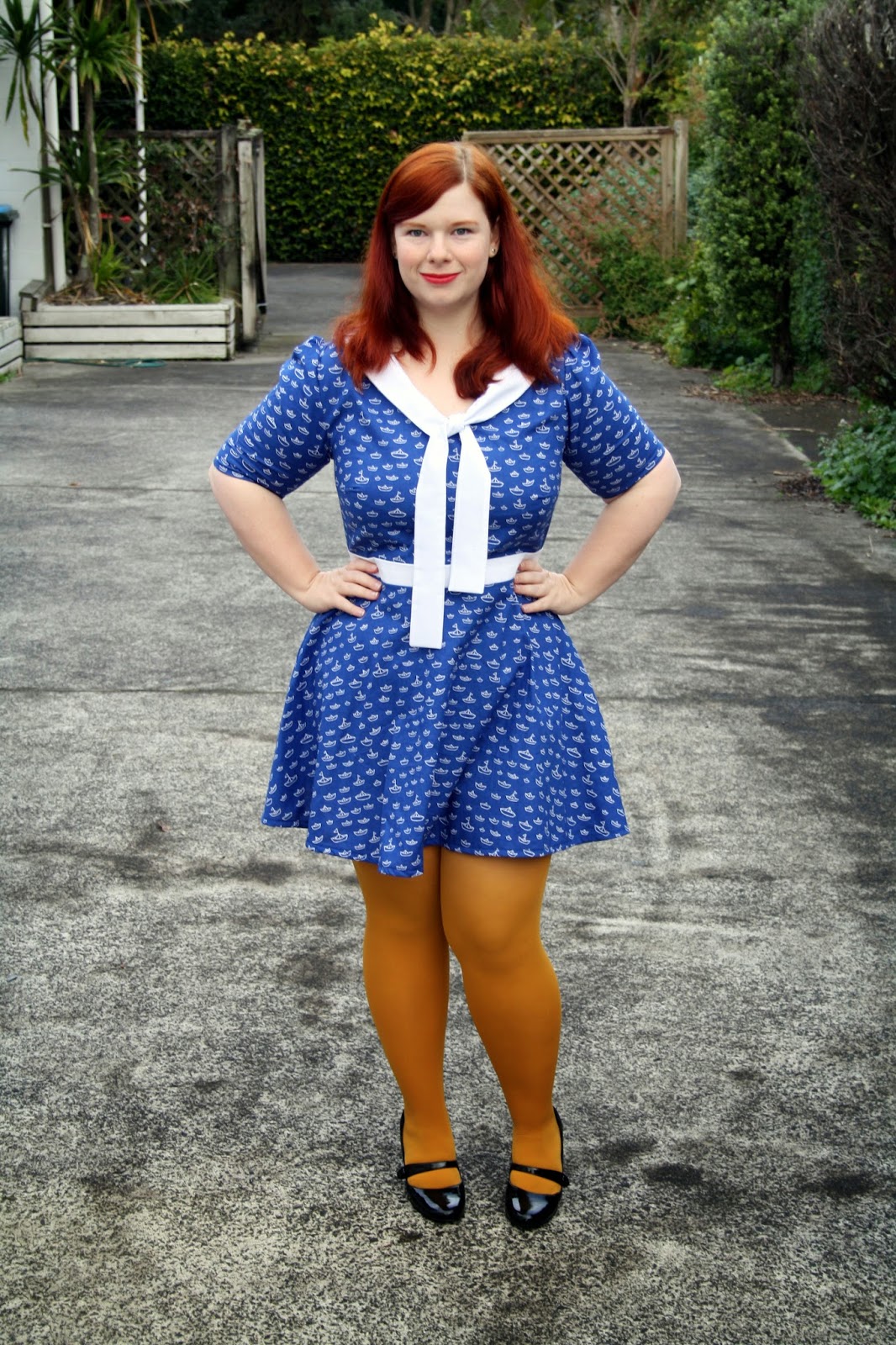
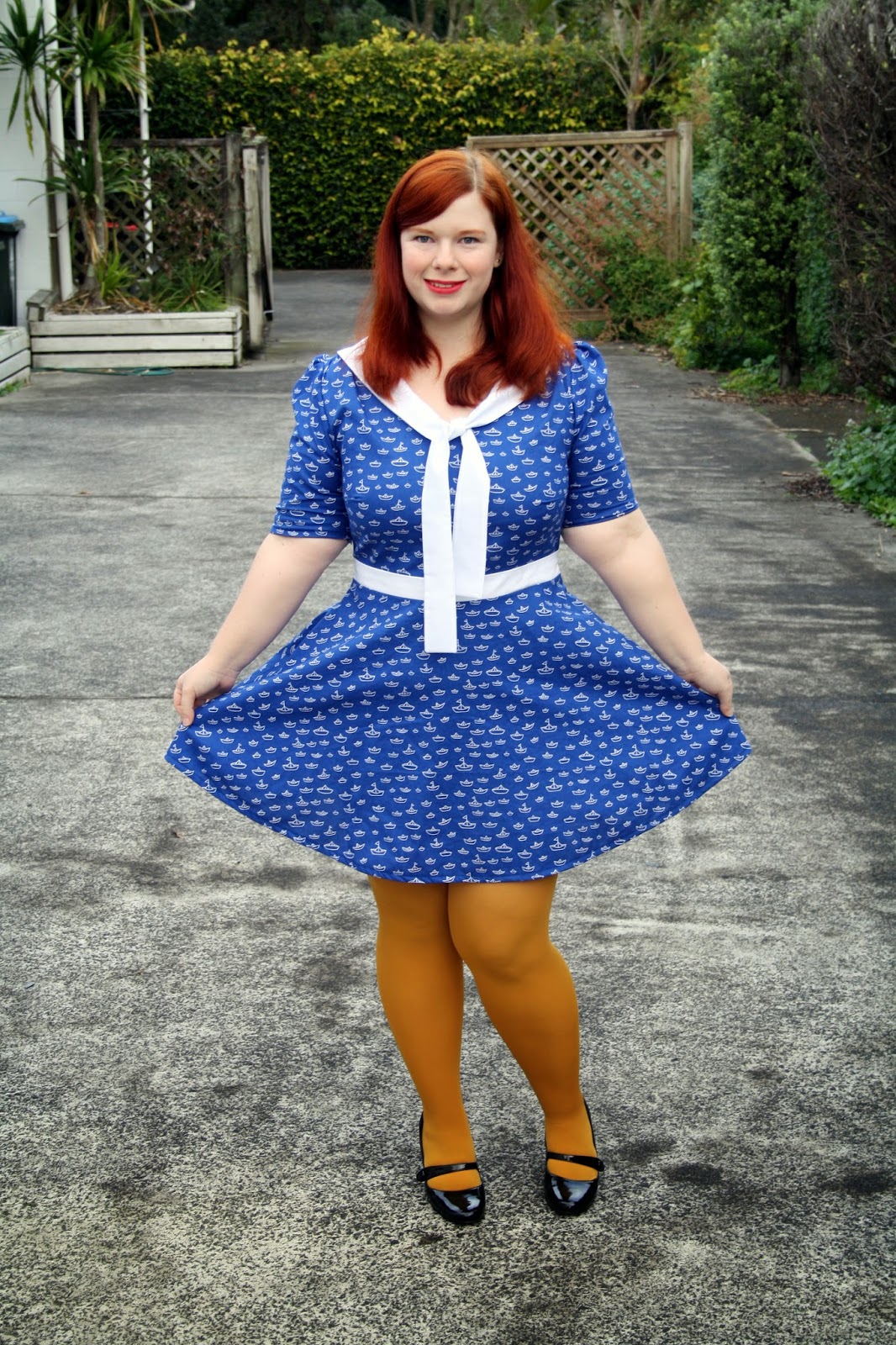
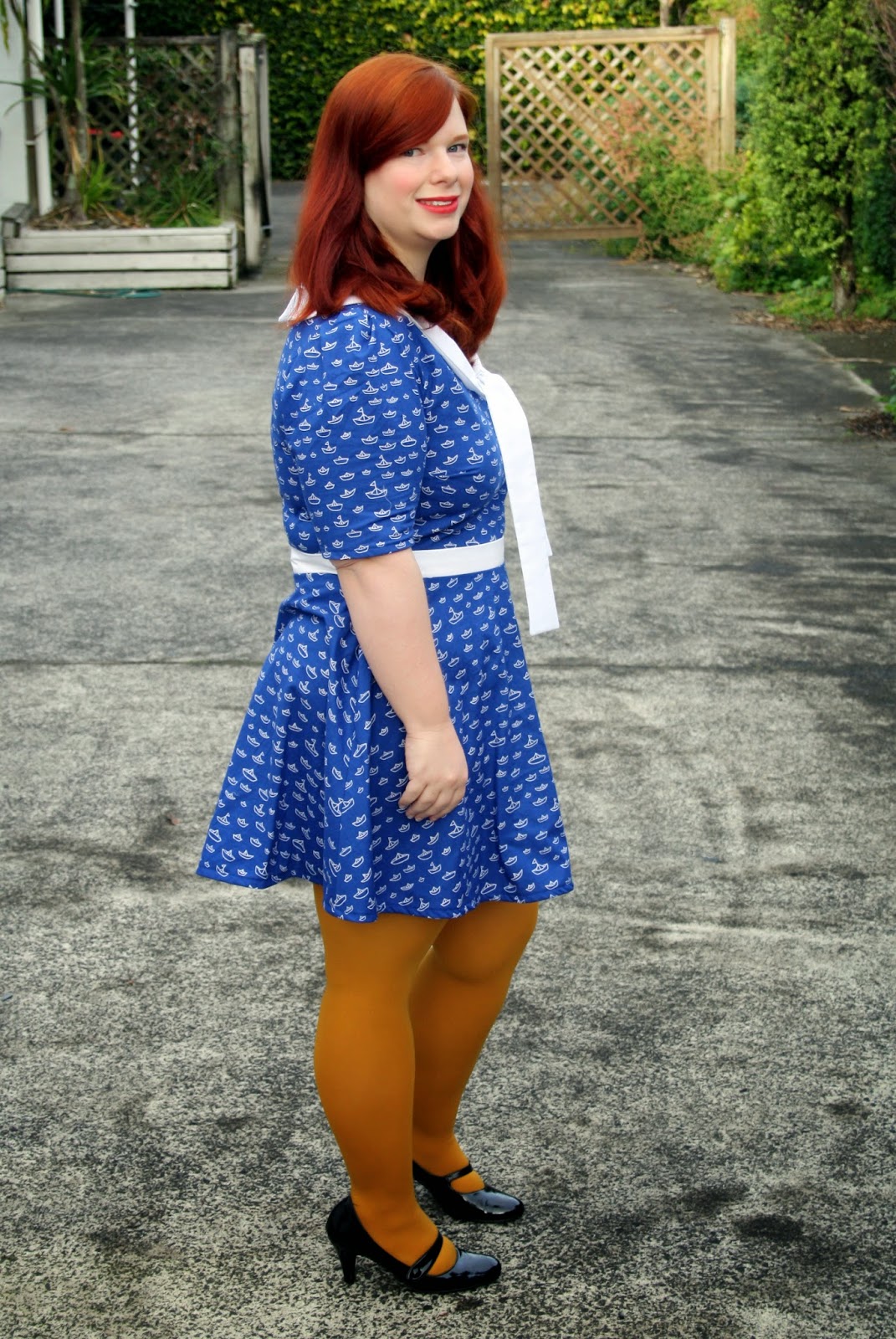
I made this dress as my entry for The Monthly Stitch Indie Pattern Month “Dresses” competition. I decided to go with a dress from one of my very favourite indie pattern companies – Deer&Doe! I chose the Reglisse dress, which I’ve owned for some time, but only ever made one muslin of, about a year go. I love the cute, flirty feel of it and it always seemed slightly nautical to me with the tie collar. If you love my dress, there’s a link at the bottom of this post to vote for me 🙂

I’ve had it in my head for a while that while I liked the Reglisse dress, I wanted to make some changes to it. I toyed with a few different ideas, and ended up changing my mind a few times throughout the process. My main goal was to eliminate the elasticated waist, as when I made the muslin it wasn’t very flattering on me. That in and of itself was such a process. I made 3 muslins, and ended up sizing down to a size 38 (or thereabouts) from a 46! I also did a narrow shoulder adjustment and moved the bust darts down 4cm and shortened them by 2cm. Phew! Thank you to all the lovely people on Twitter who helped me with the bodice! I ended up not cutting the bodice pieces on the bias, because I didn’t want my little boats going sideways! I cut the front piece on the fold, and the back in two pieces, so I could add a zip down the back. I also raised the neckline a little, and made it less of a severe “v”.

Since I changed the bodice size a lot, I thought it would be easier to draft my own circle skirt, rather than try and adjust the Reglisse circle skirt pattern piece. Ha. I used the By Hand London Circle skirt app, which has worked fine for me in the past. However, the resulting skirt (which I had to cut in two halves, since my fabric was only 115cm wide rather than the recommended 150) fit my waist, but was too small for the bodice! I adjusted it gradually until it fit, but there was quite a bit of panicking in the process. The adjusting also made the skirt shorter, which I didn’t think about. Thankfully it’s not indecent, and I kind of like this length! 

I doubled the waistband piece and cut it on the fold, so I had a seam at the back to match the back bodice. I messed up the math the first time, though, and ended up with a waistband that was 5cm too short! Math is not my strong point. I interfaced it, but I used my best interfacing on the failed waistband, and had to use stiffer stuff for the second attempt, which wasn’t ideal but seems to have worked out okay.
I used the Reglisse collar pattern piece, but I cut it in two pieces due to the back zip instead of on the fold, and “borrowed” the crossover back collar idea from the Colette Moneta. I just added a slant to back seam allowance, nothing fancy. 

Finally, the sleeves. I knew I didn’t want it sleeveless – I have tuck shop arms, and never wear sleeveless things. I drafted my own 3/4 sleeve using a tutorial online, which didn’t fit at all! I ended up winging it, using the bodice as a guide and my arm measurements, and made a muslin just to be on the safe side to check it worked. I think it turned out quite well! 

The fabric is an organic cotton from Cloud 9 fabrics, called “The Fleet”. I bought it in the US, and it’s delightfully soft and a dream to sew! I had 5 yards of it, so I made a whole heap of bias binding with it too, which I used to hem the skirt, encase the collar+neck seam and hem the sleeves. I used my favourite tutorial for the binding – it’s the only one that I can wrap my head around! Fun story – got my fabric all wrapped up like a burrito, ready to cut – and realised I don’t yet own a rotary cutter. I called Centrepoint, but they didn’t have any, however they suggested that the local art store might. One quick trip later and I now have a rotary cutter!
The waistband and collar are a white cotton poplin I got from Centrepoint Fabrics. I used a 20″ invisible zip for the back seam, and navy thread from my stash. Seams are either bound with my self-made bias binding or pinked. This dress is my new favourite, I think! 

 
http://themonthlystitch.wordpress.com/2014/06/08/ipm-dresses-let-the-voting-begin/
Standard
Uncategorized

Dotty for Moneta


I was pretty excited when Colette released her new knit patterns and I took advantage of the release sale to nab me a Moneta! I’m a big fan of knit dresses, since you can just throw them on and be ready to go, and they’re super comfy to boot.

I made this Moneta up in a cotton knit I got from my new local fabric store (as in, it’s new to me) Centrepoint Fabrics. I was walking past and thought I’d pop in and see if they had any cute knits…turned out I didn’t even need to enter the store, as they had a bolt of this on display outside! It was on sale, and 3.5 yards (more than I needed, clearly after 2 and a half years away from Australia has destroyed my ability to think in metric) was $27. Bargain! The fabric is thicker than other knits I’ve dealt with, nice and stable, and (sadly) just the tiniest bit itchy.

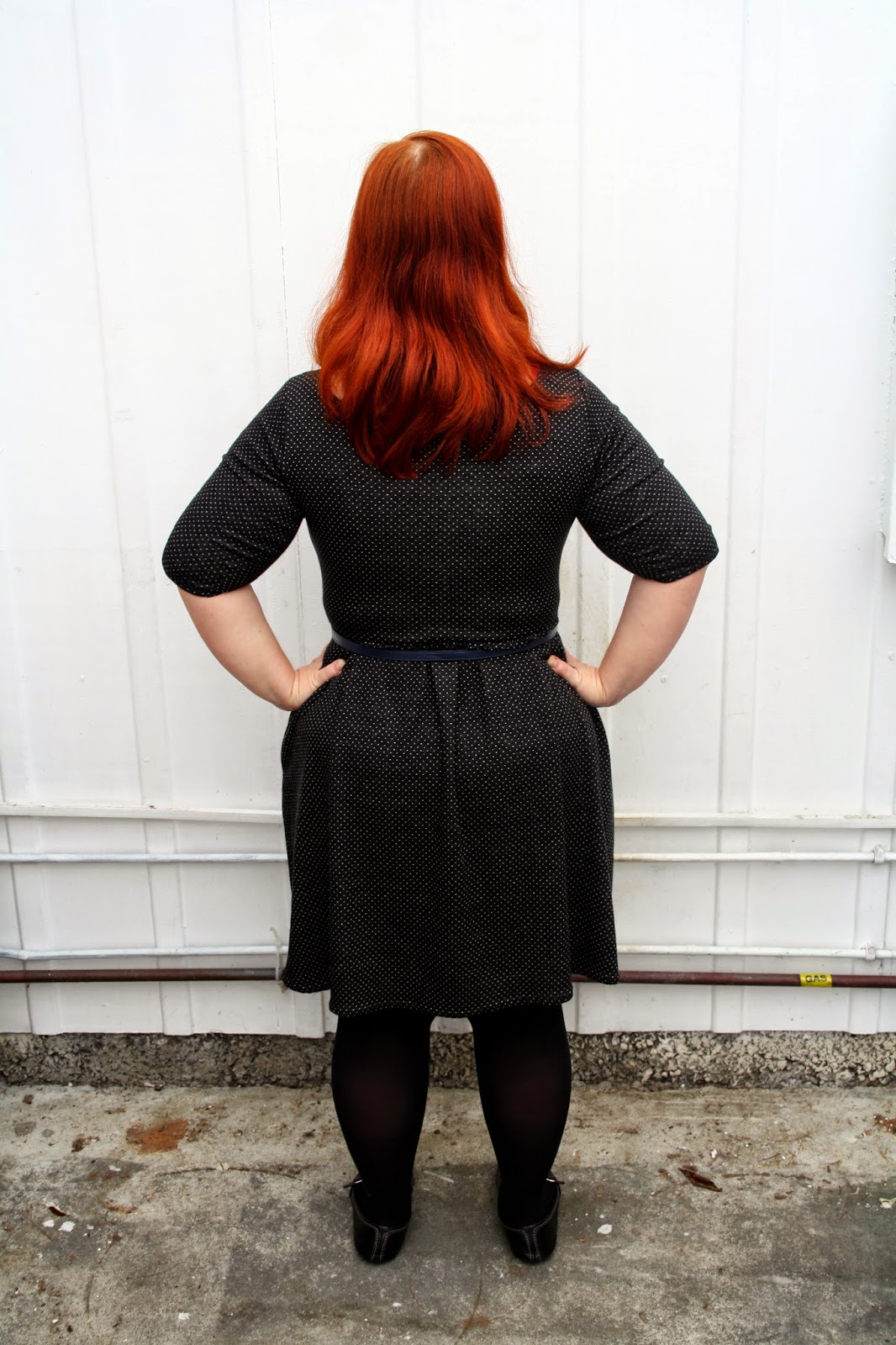
I made my Moneta in size L, since my measurements pretty much perfectly corresponded with that size. I didn’t want to make a muslin, as I have hardly any fabric right now, so I made my adjustments blind. Using my Kelly skirt as a yard stick, I shortened the skirt pieces by quite a few inches. I also shortened the bodice pieces by an inch, and I really wish I hadn’t, as the bodice sits juuust above my natural waist, which I’ve cleverly concealed with a belt 😛 My experience with the Lady Skater taught me that I should shorten the bodice of knit dresses, both because I’m short and because the weight of the skirt tugs things down, but the Colette Moneta bodice seems shorter than patterns I usually deal with, and although this fabric is weightier than a lot of knits, it’s also really stable and doesn’t stretch out of shape much. So no bodice shortening was necessary! Oh well.
I also shortened the sleeves, because I wanted the 3/4 sleeve length and on me the original sleeves would have been almost full length!

I don’t have a serger, so I followed Colette’s advice in the pattern instructions and sewed my seams with a narrow zig zag. I was very pleased with how stretchy they were – I’ve previously used a wider zig zag on my knits, and it didn’t produce as nice a stretch. I paid an outrageous sum for a ballpoint twin needle to sew the neckline, and hem the sleeves and skirt. $14 for a ballpoint twin needle! Ugh. Anyway, twin stitching the neck and hems went very smoothly, and I discovered that when I did it on my Brother machine in the US, it wasn’t working properly! Having never done it before, I didn’t know it should have a clear zig zag appearance on the wrong side, so I was pleasantly surprised when my Husky produced a lovely, professional looking finish.

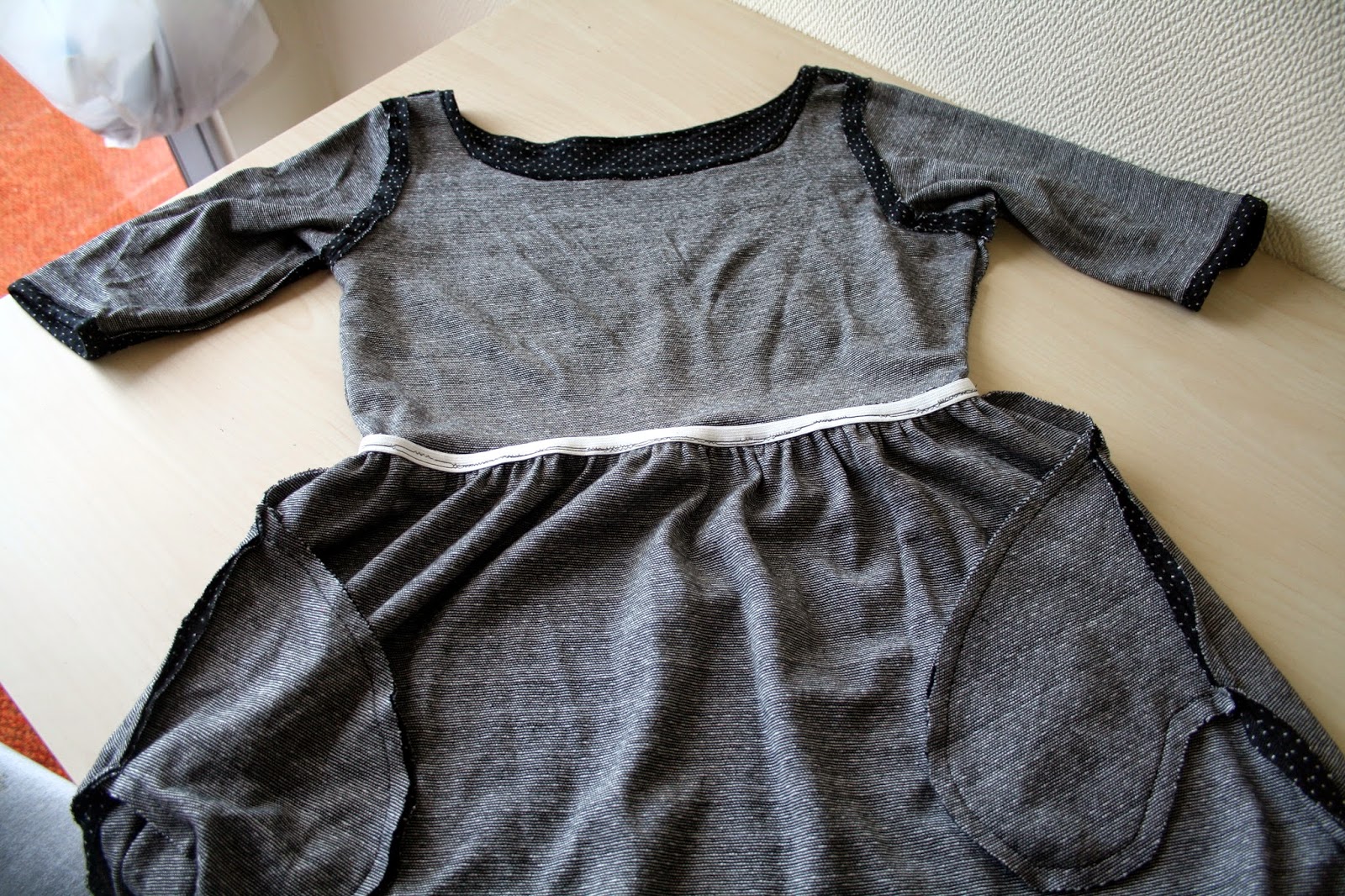
Here’s a picture of the inside of my dress – you can see straight away that I made a small change to the pattern – I didn’t use clear elastic to gather the waist. I loathe clear elastic – it’s scratchy and horrible against my skin, and after an abortive attempt to use it for a Lady Skater once, I’ve steered clear. Instead, I used regular old white knit elastic. Gathering went smoothly, probably because my knit was so stable – I know others have had problems using thinner knits with the gathering.

All in all, it was a very quick make – I made it up on one day, bar the hemming! I’ll definitely be making another one, as I spied some awesome striped knit fabric in another local fabric store last weekend that has mine and Moneta’s names written all over it.

Standard
Uncategorized

Corduroy Kelly

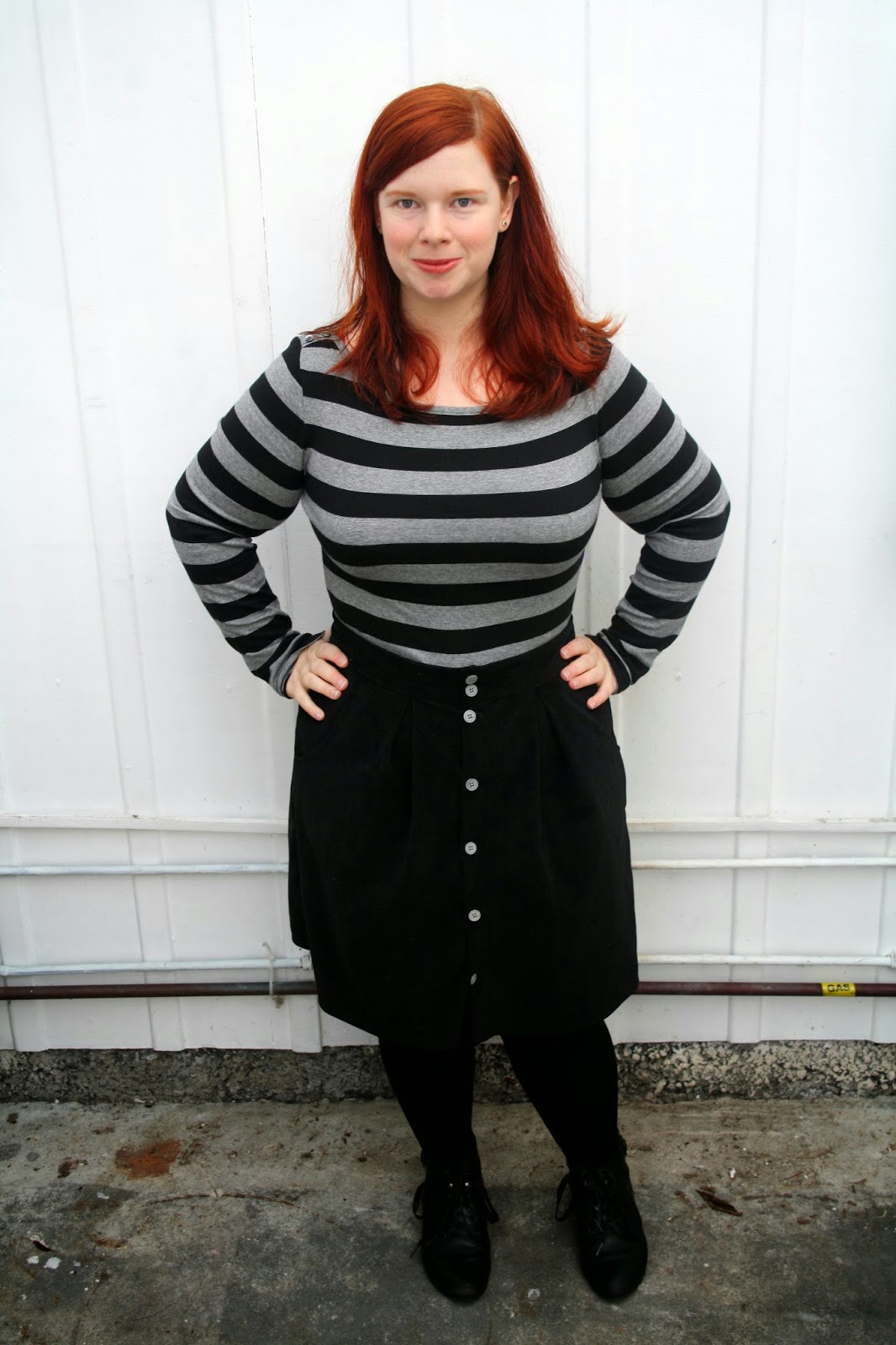
I actually made this skirt quite a while ago, back in the USA, but was too busy to blog about it at the time. The pattern is the Kelly skirt by the ever-talented Megan Nielsen, in a soft black corduroy from Hart’s Fabric. The buttons were sighted in Joann’s, but they didn’t have enough of them, so I took a photo of the packaging and found them online at Pacific Trimming. I had a very definite idea of what kind of buttons I wanted, so I was delighted to be able to get exactly what I wanted!

I whipped up a quick muslin in size XL, which is as large as the pattern goes, and was slightly dismayed to discover it was a bit too small! I ended up adding half an inch to each skirt panel pattern piece, and that worked for me. I also shortened the skirt by a fair bit, although I can’t remember the exact number of inches now.

I ran into a bit of a problem with the waistband, however. It’s quite wide, and just a straight rectangle, which didn’t mesh with my curved back. I’ve spoken about this problem on the blog before, and I should have anticipated needing to make adjustments for this pattern. Basically, I had a huge gap between the waistband and the small of my back, that I could fit my whole hand down. Not good.

What I did to fix it was, instead of one large waistband piece, I cut it into two lengthways. I could have added to the width on each piece to account for seam allowance, but I wasn’t bothered that the width would be decreased a little. Then, using the same method as my Moss skirt, I cut into the waistband in 4 places and overlapped each one by 1/4″, creating a more curved waistband. I then cut it straight down the middle and added an inch, because otherwise I would have lost the extra inch I added to help the skirt fit better earlier. This solution worked really well – the skirt waistband now hugs me all the way around, no gaping anywhere!

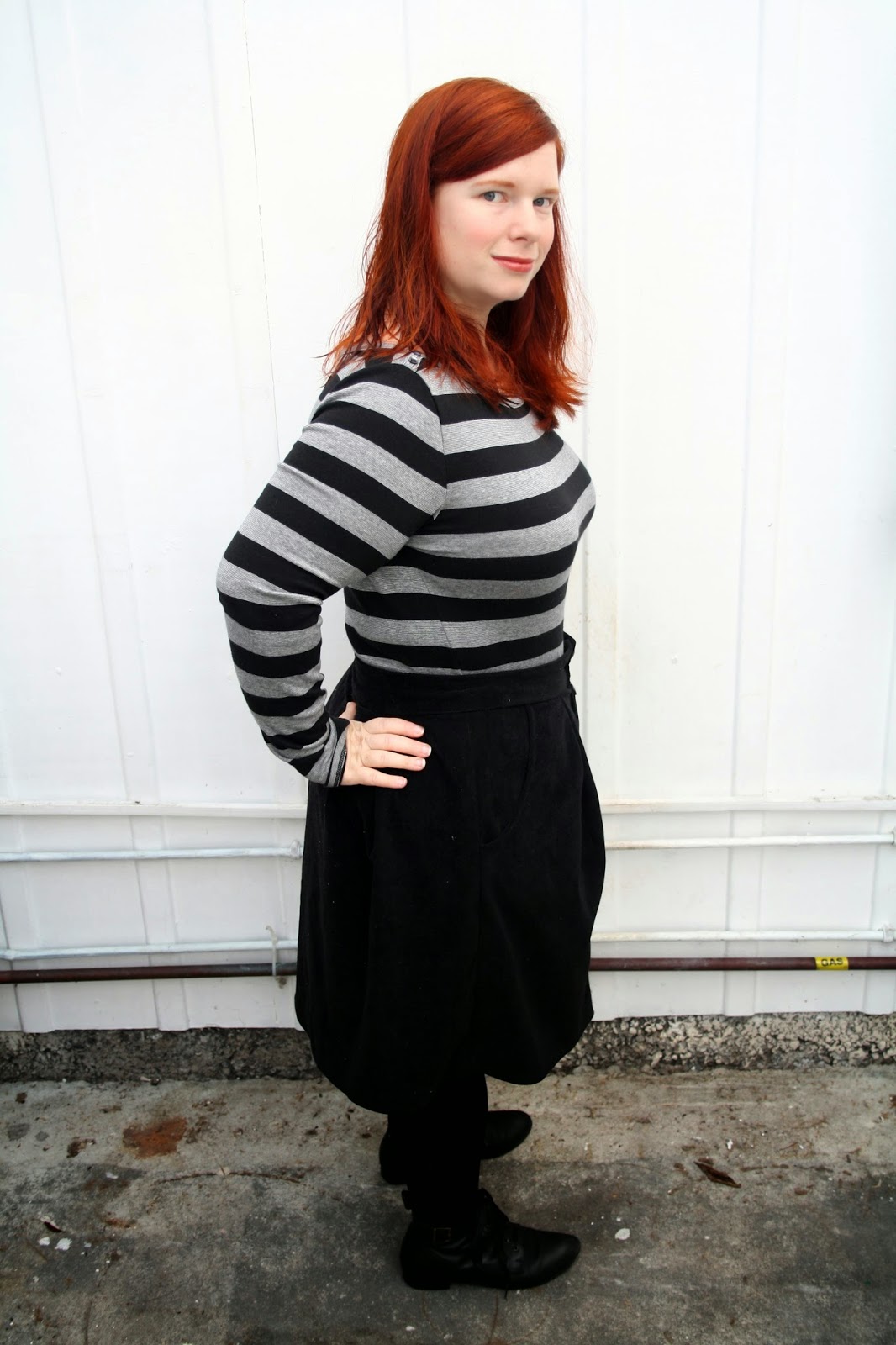
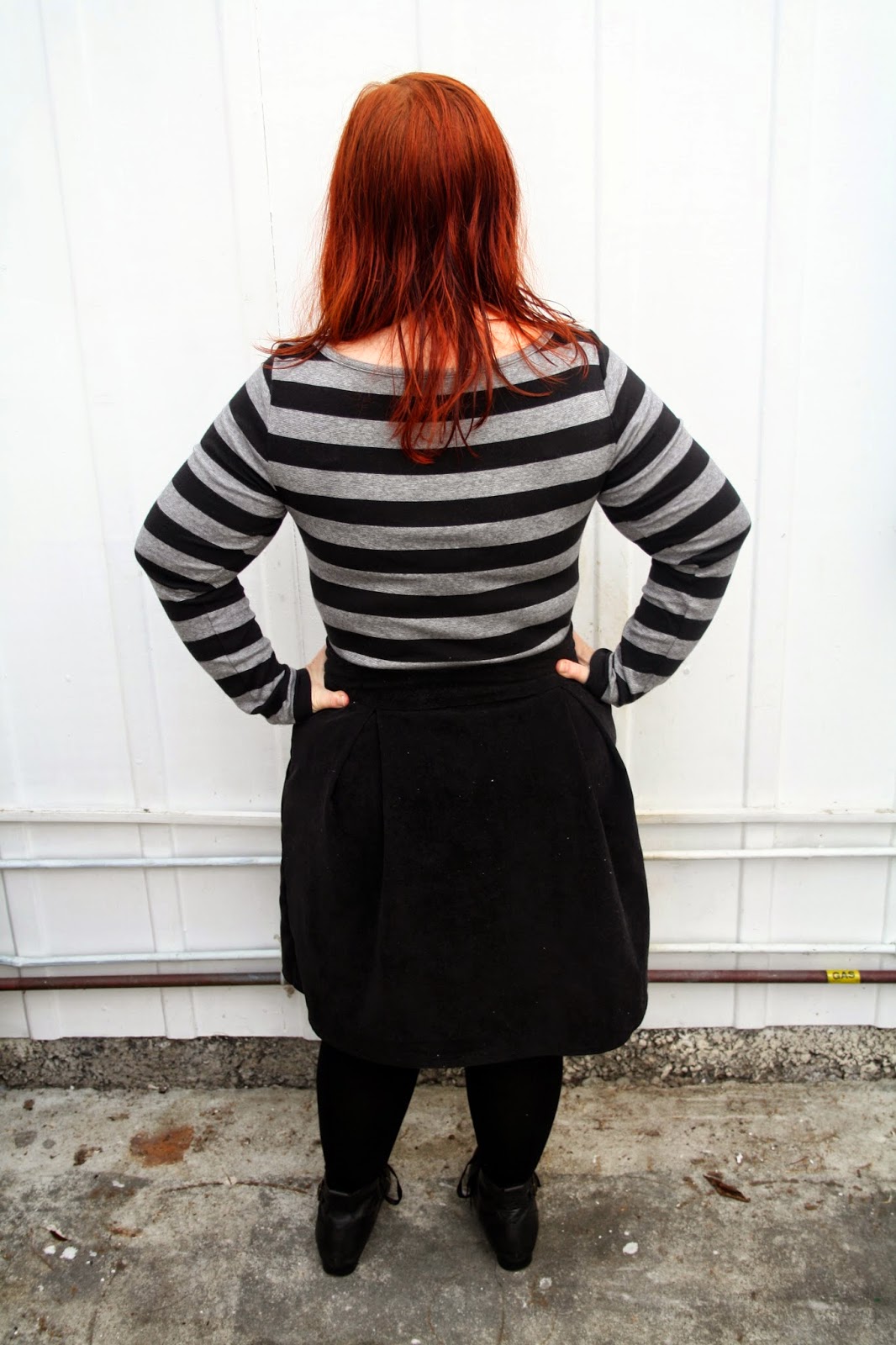
The corduroy is quite a bit thinner than most corduroys I’ve seen, but it still has a bit of body, so as you can see in the above photo, it poofs out a bit, especially at the pleats. At first I was worried that it was quite unflattering, but people have said it makes my waist look tiny, so I’m just rolling with it. I really love this skirt, I wear it quite a bit as it’s so versatile.

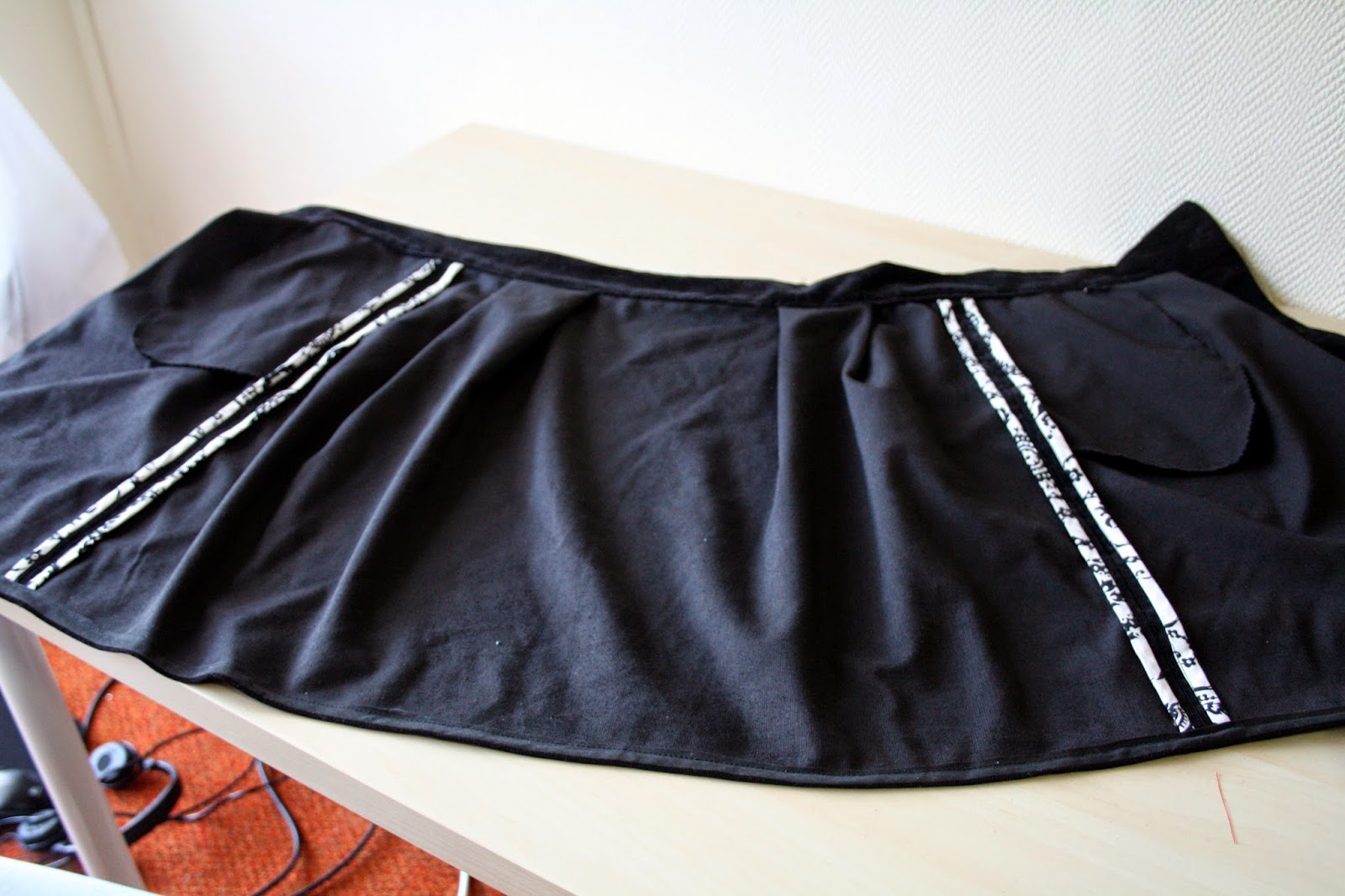
I decided I was really going to make an effort with the inside of this garment, and I am so proud of the results! I made my own bias binding from a scrap of fabric I got from the East Bay Depot, and it turned out really well. I used the Hong Kong seam finish, and it’s so neat and pretty. I finished the hem with plain old black bias binding from my stash, and pinked the pocket seams. I hand-sewed the waistband on the inside with a slip stitch the whole way around. Definitely worth spending the extra time on the finishing to the inside – I feel so smug when I wear it, and I’ll flash my seams to anyone who’ll look!

Standard